
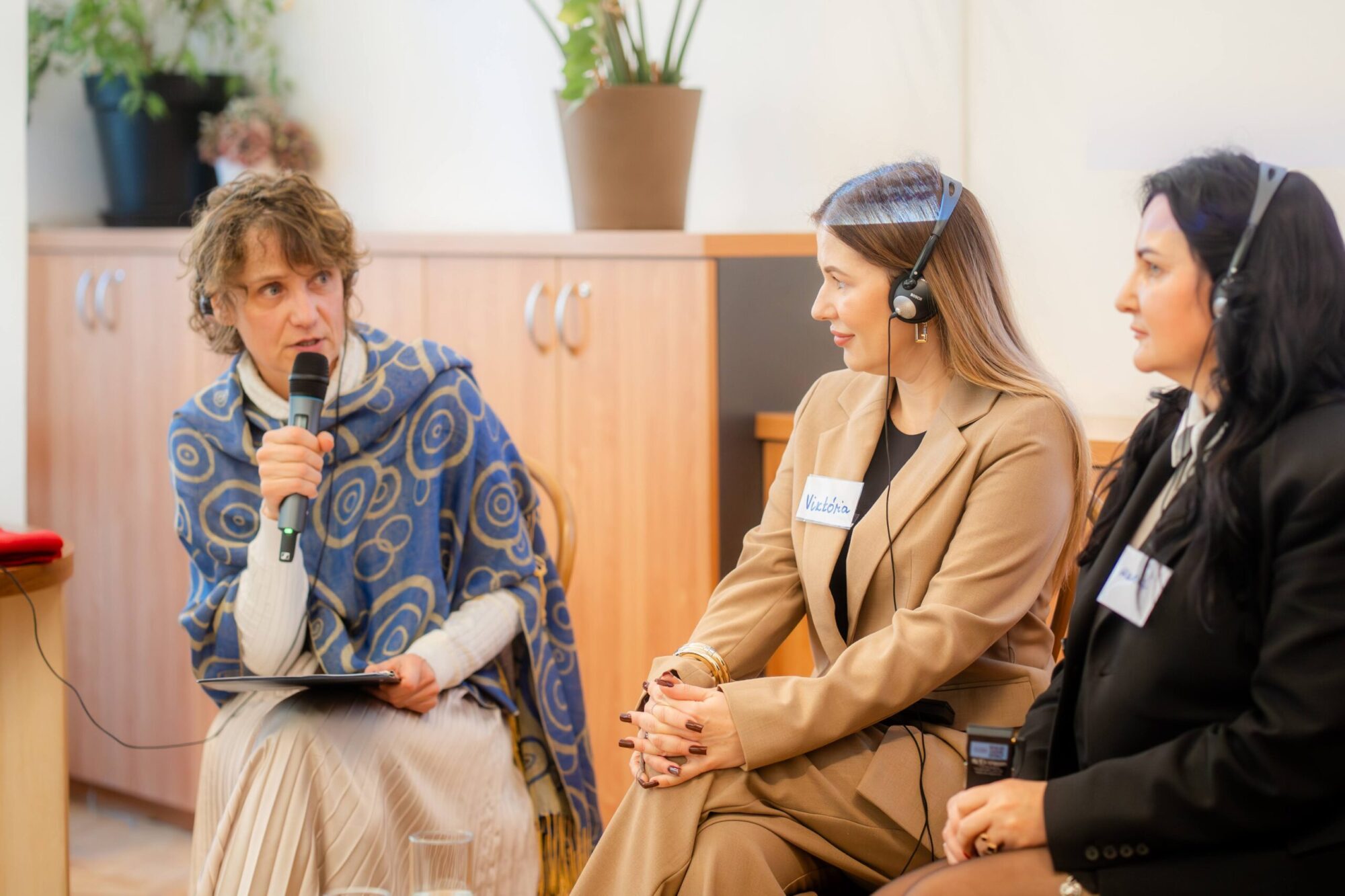
SMART UA - Hungary
Supporting Ukrainian refugees in Hungary through research, cooperation and practical pathways to stable housing and employment.
Our work in the country
In Hungary, SMART UA combines research, multi-stakeholder cooperation and practical support to strengthen the inclusion of Ukrainian refugees, with a particular focus on housing and employment. The project examines the barriers refugees face in accessing stable accommodation and sustainable work, while bringing together civil society, researchers, employers and other relevant actors to identify gaps, share experience and develop more coordinated responses.
Alongside this research and dialogue, SMART UA supports Ukrainian refugees through personalised housing assistance, skills assessment, language learning, employment guidance and training. Activities include support in navigating the housing market and local services, as well as language courses, mentoring, digital skills, soft-skills development and self-employment support aimed at strengthening access to the labour market.
SMART UA partners in Hungary
SMART UA is implemented in Hungary by JRS Hungary, Szociometrum and Evangelical Diaconia. Together, the three partners combine direct support for refugees, social research and labour-market expertise, connecting evidence with practical responses in housing and employment.


Research & Evidence in Hungary
SMART UA research in Hungary examined both the systems surrounding housing and employment and the experiences of Ukrainian refugees navigating them. Stakeholder mapping, market analysis and consultation with refugees and organisations helped identify structural barriers, gaps in existing support and promising practices.
Housing Stakeholder Mapping
The housing stakeholder mapping identifies the main organisations and actors supporting Ukrainian refugees with housing in Hungary, examining the services available, the groups reached and cooperation between providers. The report highlights a largely decentralised and fragmented support system, with major challenges including the shortage of affordable housing, limited funding, discrimination and the need for stronger coordination and more sustainable long-term solutions.
READ THE FULL REPORT.
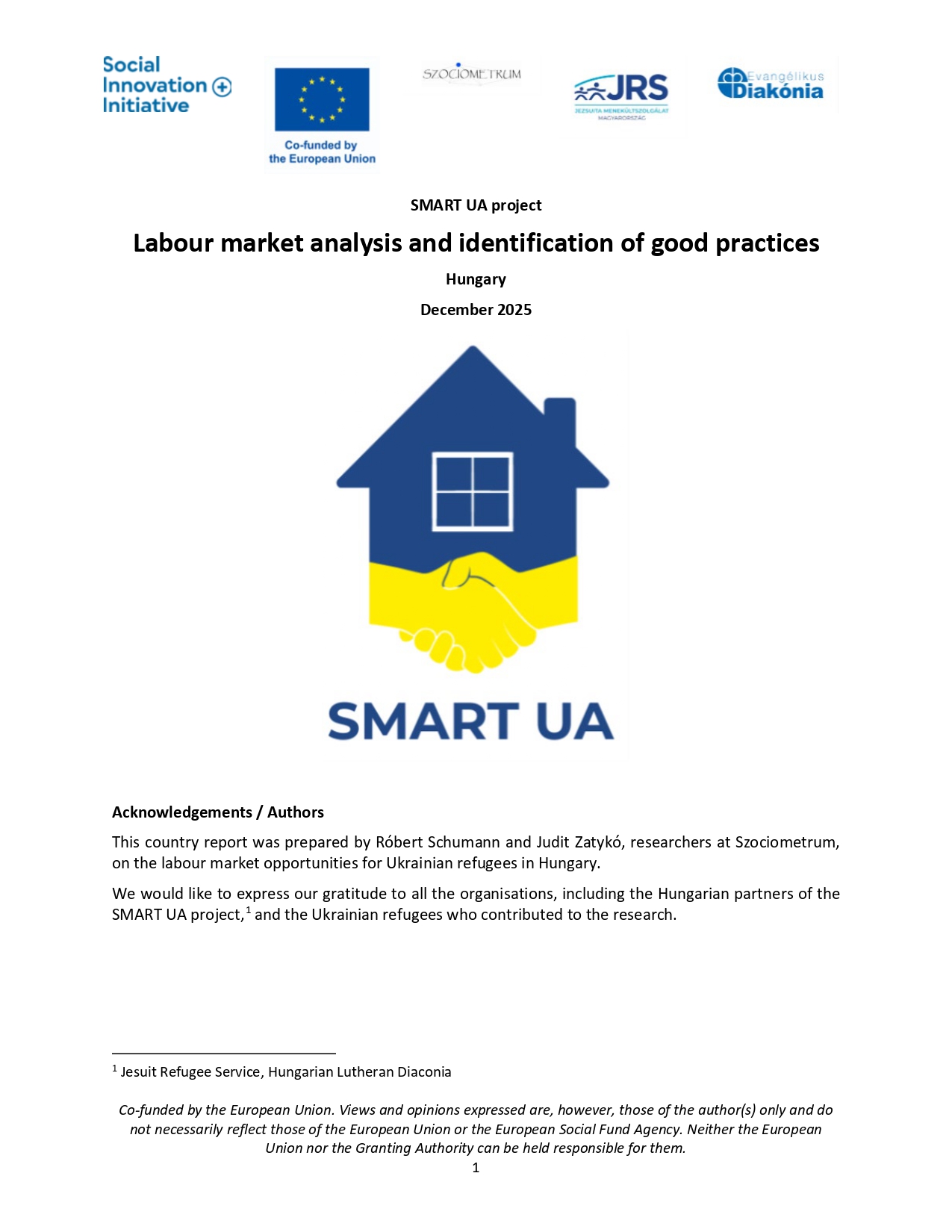
Employment Stakeholder Mapping
The employment stakeholder mapping examines the organisations and actors supporting Ukrainian refugees’ labour-market integration in Hungary, including the services they provide, their target groups and cooperation with other stakeholders. It highlights a diverse but project-dependent and fragmented support system, while identifying language barriers, recognition of qualifications, bureaucracy, childcare, discrimination and limited funding as major obstacles to sustainable employment.
READ THE FULL REPORT.
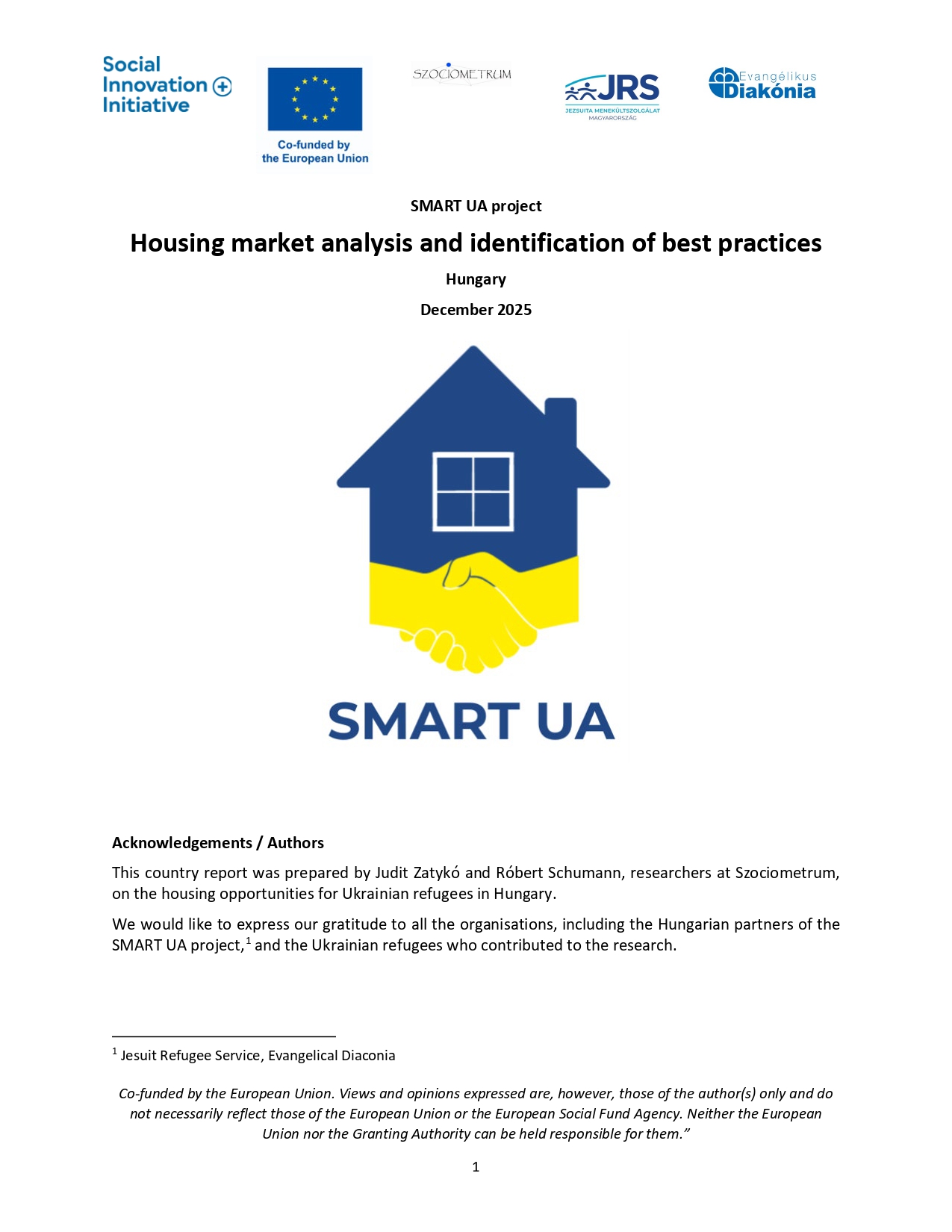
Housing Report
How are Ukrainian refugees building a sense of stability and belonging in Hungary? This report explores the realities of accessing affordable housing, the challenges faced by families, and the support mechanisms that help people move beyond emergency assistance towards longer-term integration. It also highlights good practices and recommendations to strengthen inclusive and sustainable housing solutions.
READ THE FULL REPORT.
Cooperation & Workshops
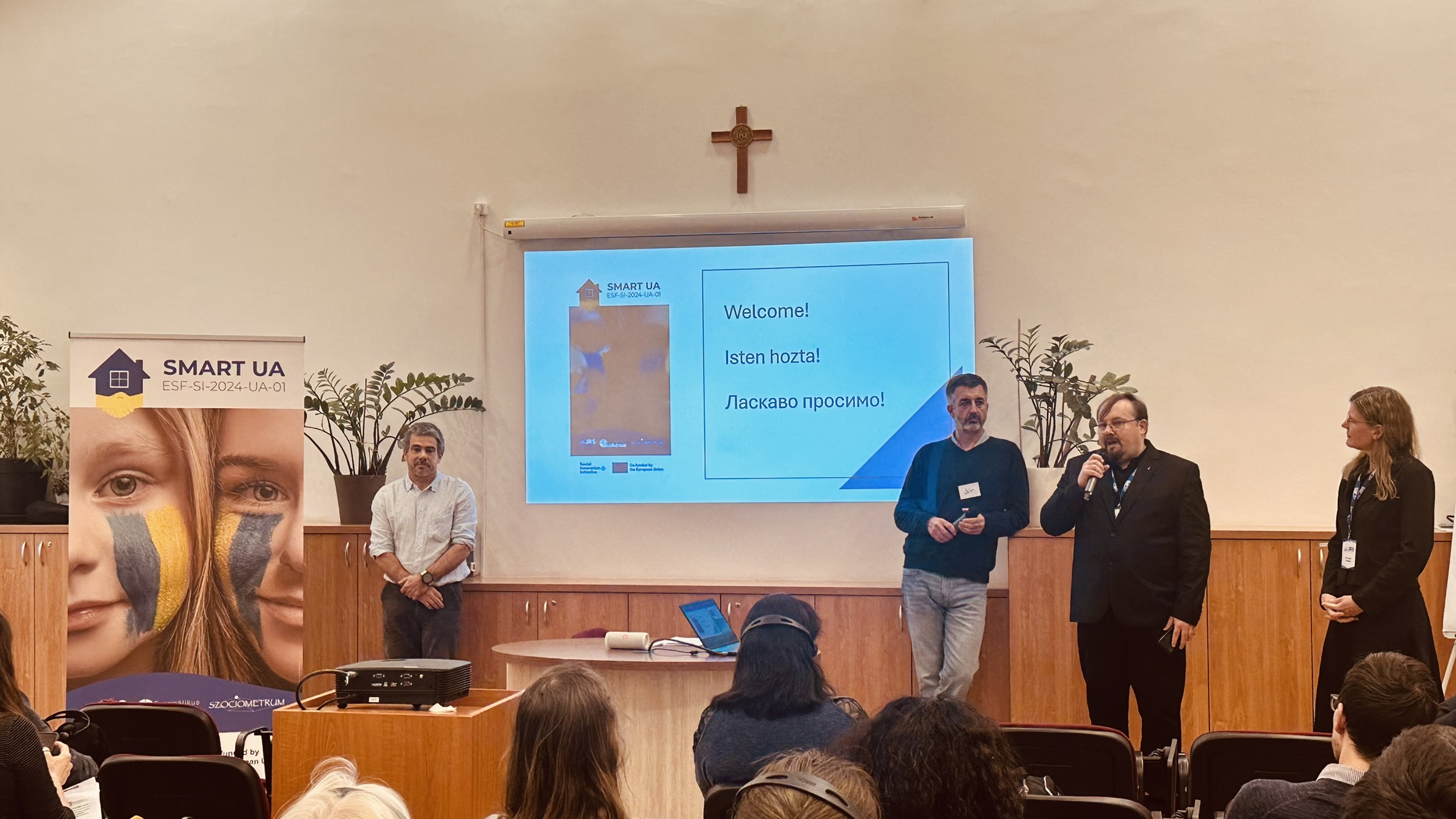
HOUSING WORKSHOP
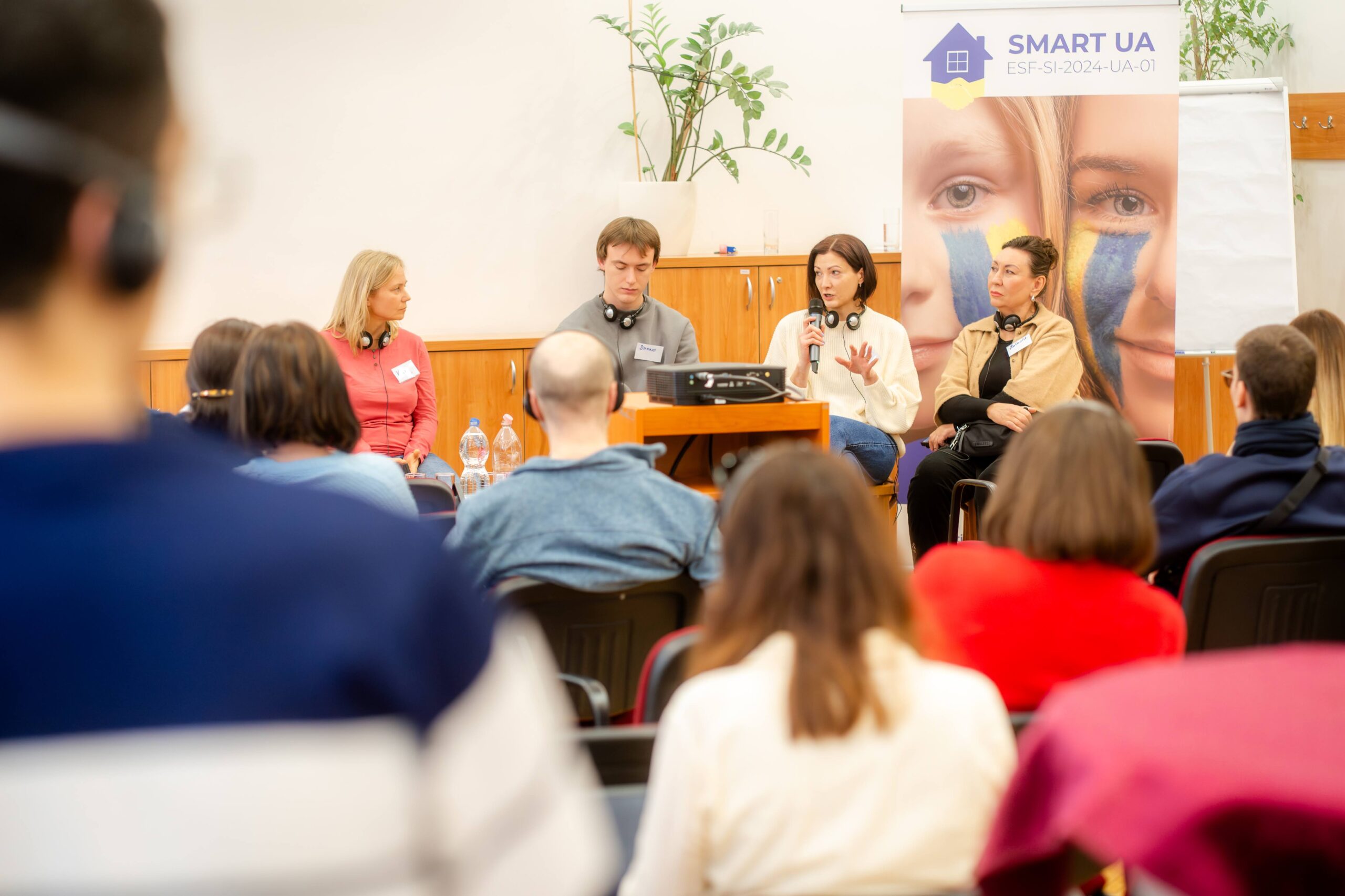
The SMART UA housing workshop in Budapest brought together 60 participants, including Ukrainian refugees, international and local organisations, municipal and state actors, housing experts, academia and representatives of the real-estate sector. The workshop presented research findings on the housing situation of Ukrainian refugees and combined stakeholder panels, refugee perspectives and group work to identify key barriers and possible solutions.
Discussions highlighted housing affordability, the lack of adequate options and the need for more reliable, long-term support systems. Recommendations also stressed stronger cooperation between NGOs, municipalities and public authorities, as well as more integrated support combining housing assistance, social work, language learning and labour-market integration.
EMPLOYMENT WORKSHOP
The SMART UA employment workshop in Budapest brought together 62 participants, including Ukrainian refugees, civil society organisations, municipal actors, employers, self-employed people and academic representatives. The workshop presented research findings on the employment situation of Ukrainian refugees and created space for both employers and refugees to share their experiences of the Hungarian labour market.
Through panel discussions and mixed-group case studies, participants explored employment barriers, practical challenges and possible solutions, and developed recommendations aimed at strengthening cooperation and improving access to more sustainable employment opportunities.
Voices from Hungary
Behind the research and activities of SMART UA are the experiences of people rebuilding their lives in Hungary. These testimonies show how access to skills, support and opportunities can contribute to greater confidence, independence and inclusion.
Articles
Explore stories, updates and reflections from SMART UA in Hungary, from project activities and research to the experiences of Ukrainian refugees and partners.
SMART Housing: Report on a Capacity Building Workshop
A workshop in Budapest bringing together Ukrainian refugees and key stakeholders to discuss housing affordability, limited supply and integration barriers, and identify recommendations for more stable and coordinated support.
SMART Employment: report on a Capacity Building Workshop
A workshop exploring the main barriers Ukrainian refugees face in the Hungarian labour market, including language skills, qualification recognition, childcare and informal employment, alongside practical recommendations for stronger labour-market inclusion.
More Than Data Collection: Fieldwork Insights from the SMART UA Project in Hungary
Reflections from the SMART UA research process in Hungary, highlighting the importance of personal contacts, trust-building and cooperation with local organisations when mapping support systems for Ukrainian refugees.
Organisational Experiences on Housing Support for Ukrainian Refugees in Hungary
Insights from organisations supporting refugees with housing, highlighting shrinking funding, high rental costs, discrimination and the importance of local partnerships in providing more sustainable assistance.
Labour Market Services for Ukrainian Refugees in Hungary
An overview of employment support available to Ukrainian refugees in Hungary, examining job-search services, language and digital training, mentoring and the barriers that continue to limit access to stable employment.
Housing in insecurity – the housing situation of Ukrainian refugees through the lens of a Hungarian survey
Survey findings on the housing situation of Ukrainian refugees in Hungary, highlighting high rents, dependence on the private rental market, administrative barriers and discrimination as key sources of housing insecurity.
Labour market participation of Ukrainian refugees in Hungary through the lens of a survey
Survey findings exploring Ukrainian refugees’ participation in the Hungarian labour market and the impact of language barriers, qualification recognition, childcare and other structural constraints on access to suitable employment.
Co-funded by the European Union. Views and opinions expressed are, however, those of the author(s) only and do not necessarily reflect those of the European Union or the European Social Fund Agency. Neither the European Union nor the Granting Authority can be held responsible for them.