
Accompaniment: The Heart of Our Mission in Kakuma
25 October 2026
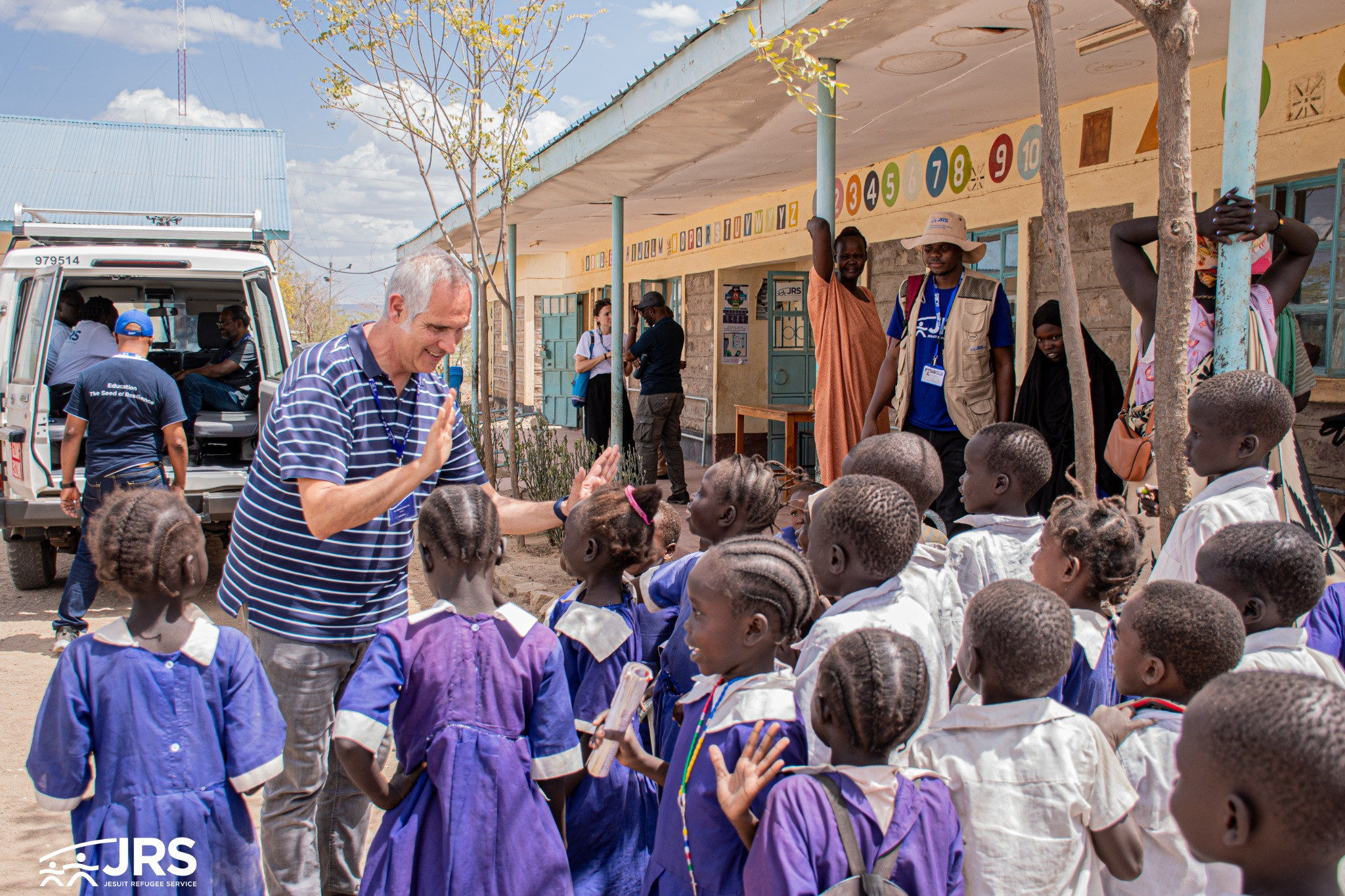
Alberto Ares, Regional Director, JRS Europe
I have just returned from Kakuma Refugee Camp with a heart full of gratitude, admiration and hope. Over these days with the JRS team in Kenya, I have seen once again that everything in our mission begins and finds its meaning in accompaniment: the great treasure of JRS and of Ignatian spirituality. In Kakuma, accompaniment is not an abstract idea. It is present in a classroom of ninety girls preparing for their final examinations, in a parent caring for a child with a disability, in a young person learning digital skills, and in a woman building a business with courage and creativity.
Kakuma, in Turkana County, north-western Kenya, is home to refugees from many countries who have sought safety and the possibility of a better future. In this challenging context, JRS accompanies refugees through education, inclusive education, psychosocial support and livelihoods, placing the needs, dignity and potential of each person at the centre.
A visit full of life
Our first day began at Vision Secondary School, where we met the Gender Responsive Education (GRE) Boys’ and Girls’ Clubs. These clubs create safe spaces for young people to reflect on equality, respectful relationships, communication, protection and the importance of continuing their education. They encourage girls to pursue their dreams, while inviting boys to become allies in building more just and supportive communities.
I will never forget a class of ninety girls preparing for their final exams. In a crowded classroom, their concentration, joy and determination were extraordinary. Nearby, a group of boys proudly explained their poultry project: an example of how education can nurture not only academic learning, but also responsibility, creativity and self-reliance.
We also visited “New Cush” inclusive school, a school where every child is called a “learner with different abilities.” This simple language expresses a profound truth: every child has gifts, potential and a rightful place in the community. JRS’s inclusive education work in Kakuma offers specialised education, psychosocial support and services for children with disabilities, while also accompanying their families.
On the second day, we visited families with children living with disabilities. I was deeply moved by the tenderness and professionalism of the JRS team, and even more by the parents who give everything for their children in such difficult circumstances. Their love reminded me that care is one of the most powerful forms of advocacy.
We then met Fabiola, founder of Amazing Flour Foods, supported through the Pathfinder project. Her story showed how livelihood opportunities can restore dignity, independence and hope. At the Arrupe Centre, we shared time with almost 100 young people participating in IT and digital inclusion programmes, including the Digital Inclusion Program (DIP) and SNHU initiatives. These programmes combine digital and business skills with job-placement support, helping refugees access new opportunities.
In Kalobeyei, we visited the Peace House Design Shop, a beautiful initiative empowering refugees through creativity, skills and entrepreneurship. At lunch and dinner, we shared deeply with the JRS team, celebrating their commitment and giving thanks for the hope that grows from their daily work.
Three lessons from Kakuma
This visit has taught me at least three lessons.
First, everything makes sense through accompaniment and an integrated model of intervention. In Kakuma, education, protection, psychosocial support, inclusive programs and livelihoods are not separate activities. They respond to the whole person. The migrant or refugee is not a beneficiary of isolated projects; she or he is a person with dreams, relationships, talents and rights. JRS’s whole-person approach prioritises refugee agency, self-reliance and meaningful integration.
Second, we need spaces to share and dream together with our teams in the field. We live in complex times, and it is vital to listen deeply, to learn first-hand what is happening on the ground, and to connect those realities with our priorities and strategy at local, regional and global levels. The richness of these conversations with teachers, social workers, livelihood officers, families and young people reminded me that strategy becomes credible only when it is rooted in the lived experience of those we serve.
Third, we are call to build bridges and generate connections. The creativity and audacity of the JRS team in Kakuma helped me connect with many other JRS realities around the world. Seeing our strategic framework become flesh in daily life: in a girls’ club, a poultry project, an inclusive classroom, a digital training centre or a refugee-led business, invites us to ask how our teams can learn from one another across such rich diversity.
Gratitude on the Day of Hospitality
As we celebrate the Day of Hospitality on 22 October, I want to thank the entire JRS team in Eastern and Southern Africa, JRS Kenya, and especially the team in Kakuma Refugee Camp. Thank you for your hospitality, commitment and love. From your service, so much hope is born.
Kakuma has reminded me that hospitality is not simply welcoming people into a place. It is creating the conditions for every person to be recognised, to participate, to learn, to work and to dream. It is walking together.
As I reflect on these days, I leave with three questions:
- How can we continue to place the whole person—their dignity, needs, gifts and dreams—at the centre of every JRS programme, building a community that walks together and learns together?
- How can we create more spaces of encounter with our teams in the field to share, listen and dream together, connecting local realities with our regional and global mission?
- How can we enable our teams to learn from one another across the richness and diversity of JRS around the world, so that creativity and audacity continue to renew our shared mission?