
Share & Scale
SMART UA shares its research, practical tools and project experience beyond the three participating countries to support wider learning, advocacy and replication. Through reports, videos, testimonies and the final European event, the project brings together evidence and lived experience to highlight promising approaches to housing and employment inclusion that can be adapted and scaled in other contexts.
Slovak: https://jrseurope.org/en/share-scale-sk/
Romanian:https://jrseurope.org/en/share-scale-ro/
Hungarian: https://jrseurope.org/en/share-scale-hu/
ADVOCACY REPORT
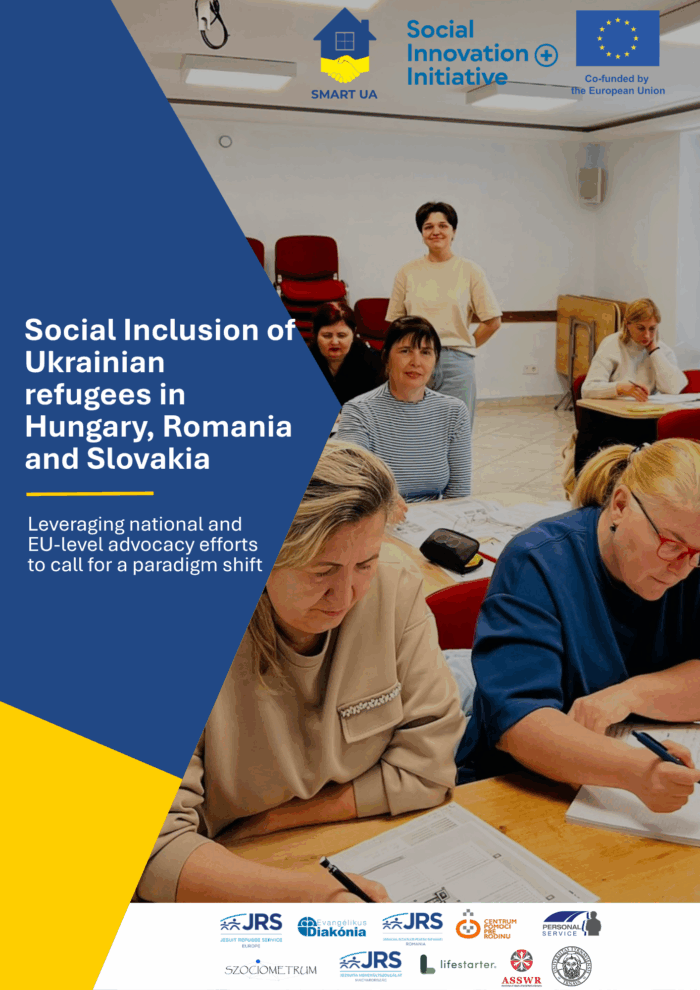
The new SMART UA Advocacy Report brings together evidence and experience from Hungary, Romania and Slovakia to examine the barriers Ukrainian refugees face in accessing stable housing and sustainable employment.
Drawing on research, stakeholder engagement and project implementation, the report highlights the close connection between housing and employment, the value of personalised support and the importance of stronger cooperation between public authorities, civil society, employers and other actors. It concludes with policy recommendations for EU institutions, national and local authorities, and civil society organisations.
READ THE FULL REPORT.
Final European Event
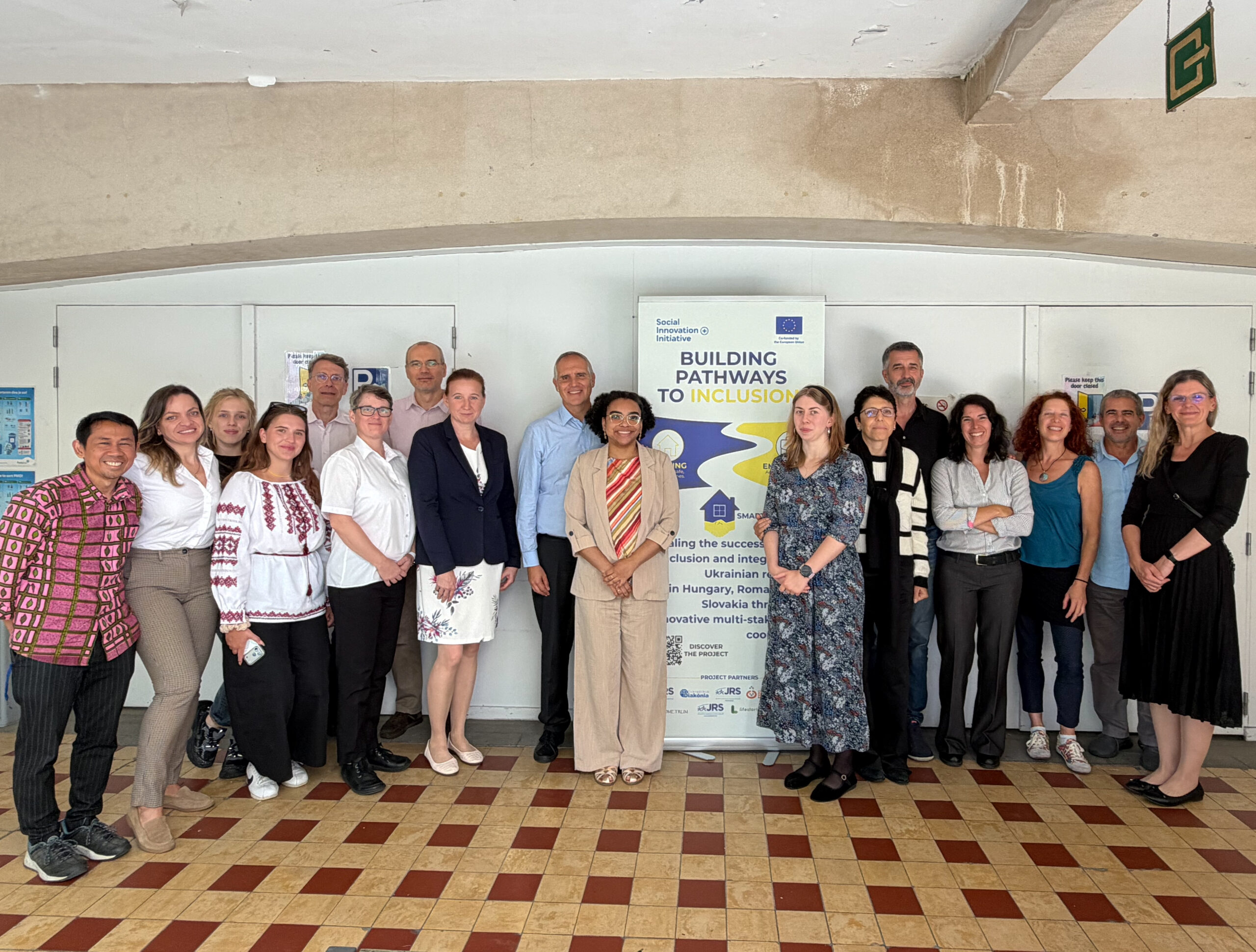
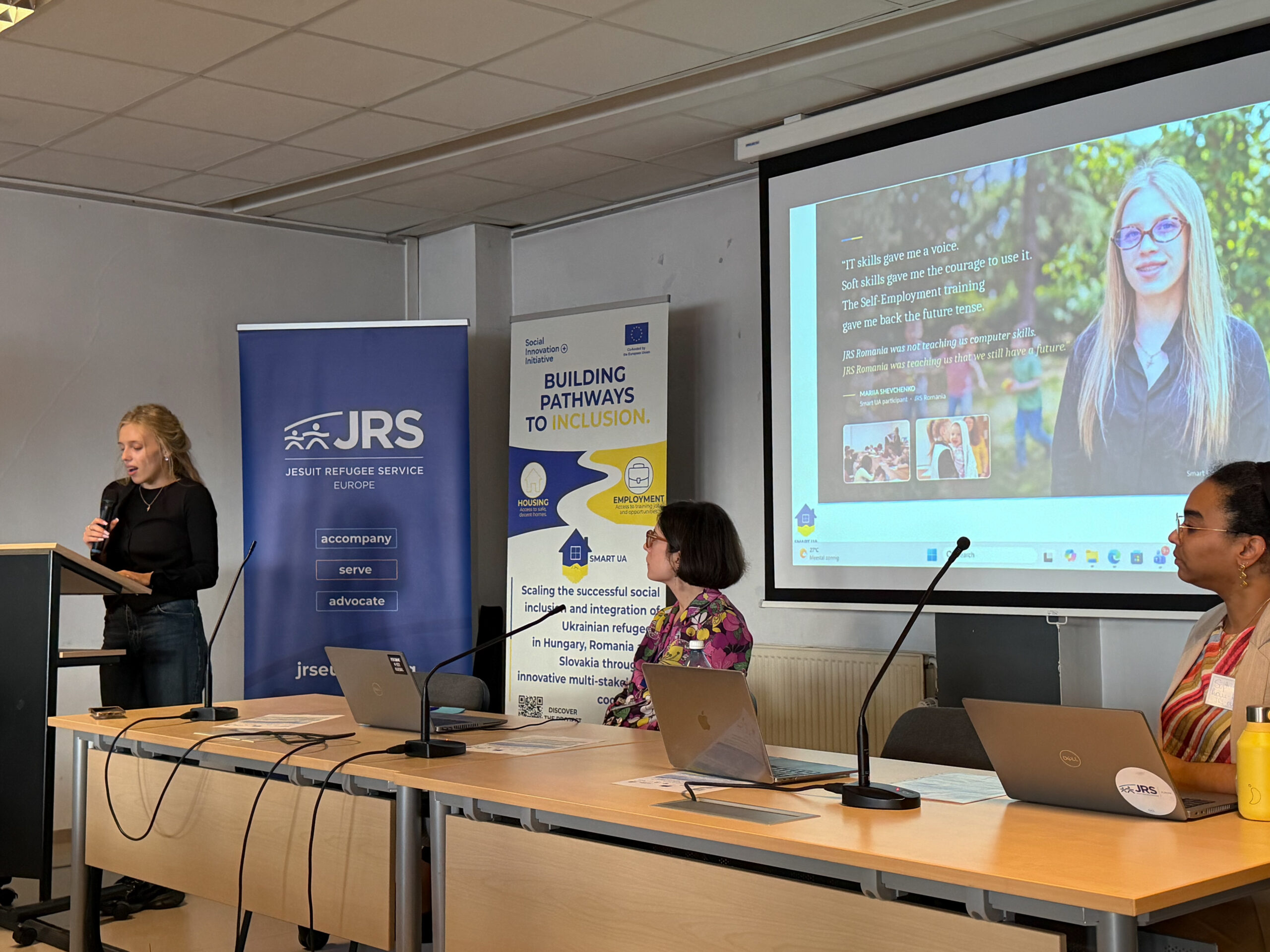
On 15 September 2026, SMART UA partners gathered in Brussels for the final event, “Creating Pathways to Inclusion: Housing and Employment for Ukrainian Refugees in Hungary, Romania and Slovakia.” More than 100 participants joined in person and online to reflect on project findings, practical approaches and lessons learned around access to housing and employment.
The event combined research from the three countries, implementation experience, advocacy discussions and refugee perspectives, including the testimony of Mariia Shevchenko, a SMART UA participant living in Romania. Discussions highlighted the importance of personalised support, responsible use of data, stronger cooperation between stakeholders and continued advocacy for fair access to housing and labour markets.
The event also created space to consider how SMART UA’s evidence, practical experience and multi-stakeholder cooperation can continue to inform future responses for Ukrainian refugees.
Country Videos
Three country videos present how SMART UA was implemented in Hungary, Romania and Slovakia, combining the perspectives of project partners with the experiences of Ukrainian participants.
The videos show how research, cooperation and targeted support were translated into practice in each national context, highlighting key activities, challenges, lessons learned and the impact of the project on pathways to housing, employment and inclusion.
Voices from SMART UA
Testimonies from Ukrainian participants offer a personal perspective on the project, showing how language learning, skills development, employment support and other activities influenced their everyday lives and future opportunities.
These stories complement the project’s research by highlighting the experiences, challenges and progress of the people directly involved in SMART UA.
Read the full testimony
Mariia’s story
From displacement to new opportunities in Romania
After leaving Ukraine with her family in 2022, Mariia came to Romania, where she had to adapt to a new country, school and language. Today, she studies International Relations at university and teaches English to children in Bucharest.
Through SMART UA, Mariia took part in self-employment, IT and soft-skills courses. Alongside developing practical skills, she says the project helped her gain confidence, meet new people and discover new opportunities for her future.
But the most important thing I got from the project was confidence. I learned that new skills can give us new opportunities.
Co-funded by the European Union. Views and opinions expressed are, however, those of the author(s) only and do not necessarily reflect those of the European Union or the European Social Fund Agency. Neither the European Union nor the Granting Authority can be held responsible for them.