Where Hope Meets Hospitality: celebrating positive stories and best practices with people on the move
01 August 2026
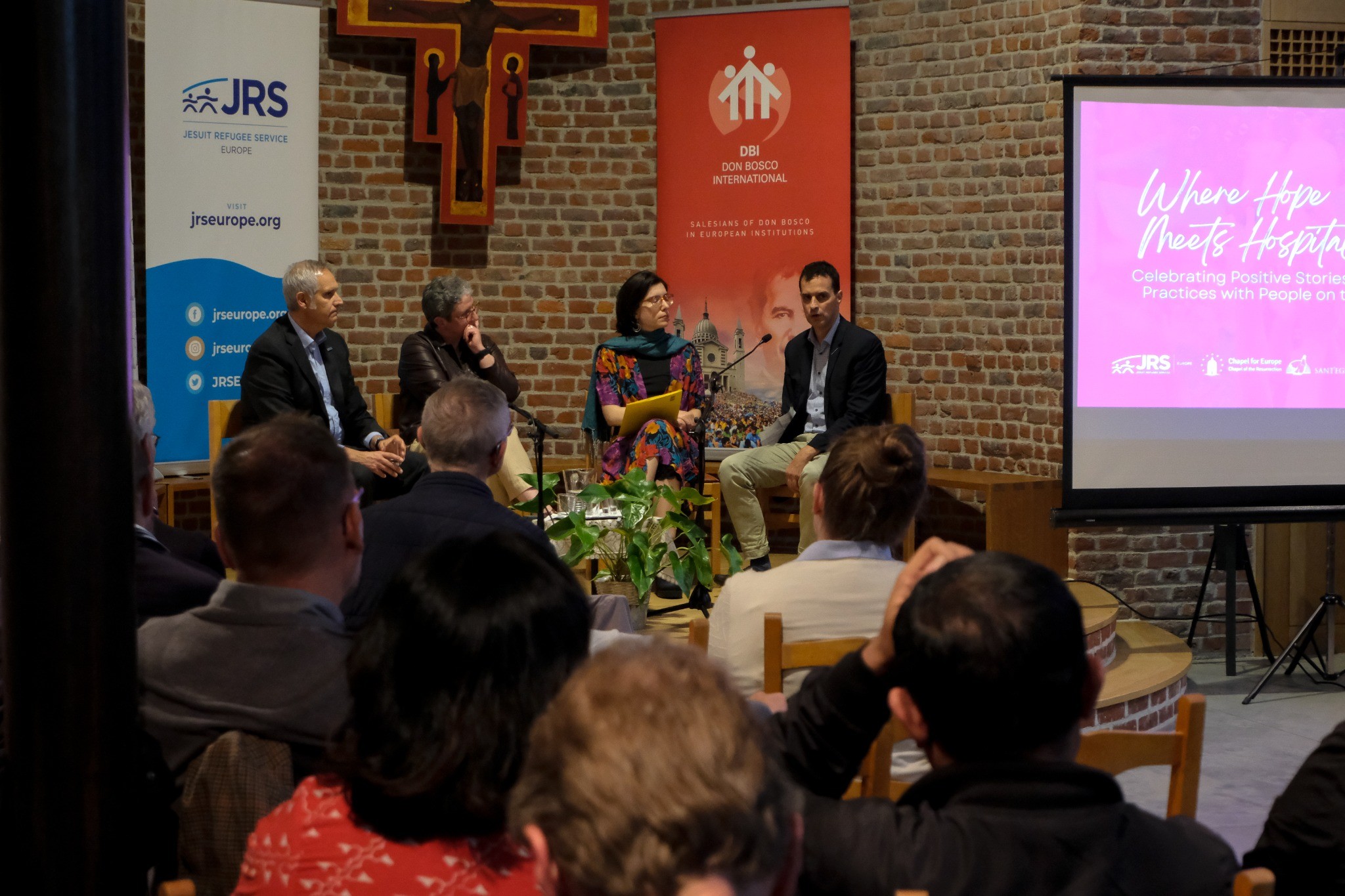
On 11 June, JRS Europe, together with Chapel for Europe, Sant’Egidio, Don Bosco International, and the Africa Europe Faith and Justice Network, co-hosted Where Hope Meets Hospitality: Celebrating Positive Stories and Best Practices with People on the Move in Brussels. The event, organized in the framework of the upcoming World Refugee Day, brought together colleagues, partners, and attendees for an evening marked by rich reflections, genuine engagement, and a shared commitment to building more inclusive societies.
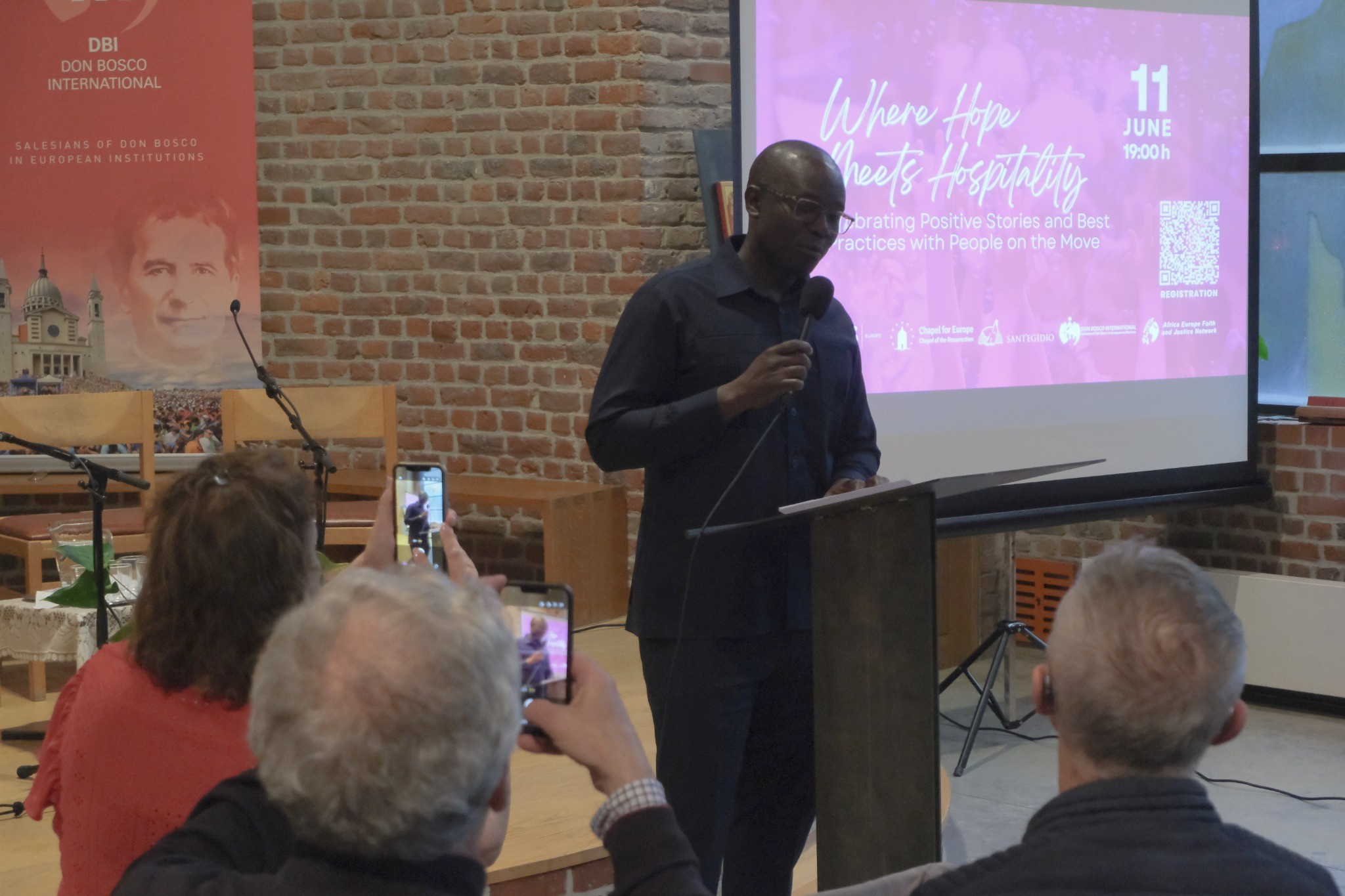
The programme opened with a personal testimony of resilience by Elvis Ngandwe of the Africa Europe Faith and Justice Network, offering a powerful reminder of the human stories behind migration. This was followed by a round table on best practices, moderated by Alberto Ares of JRS Europe, with contributions from Cécile Robillard of Bosco-Avenir, Gonçalo Macedo of the Kamiano Soup Kitchen at the Community of Sant’Egidio Brussels, and Mariza Koronioti of JRS Europe.
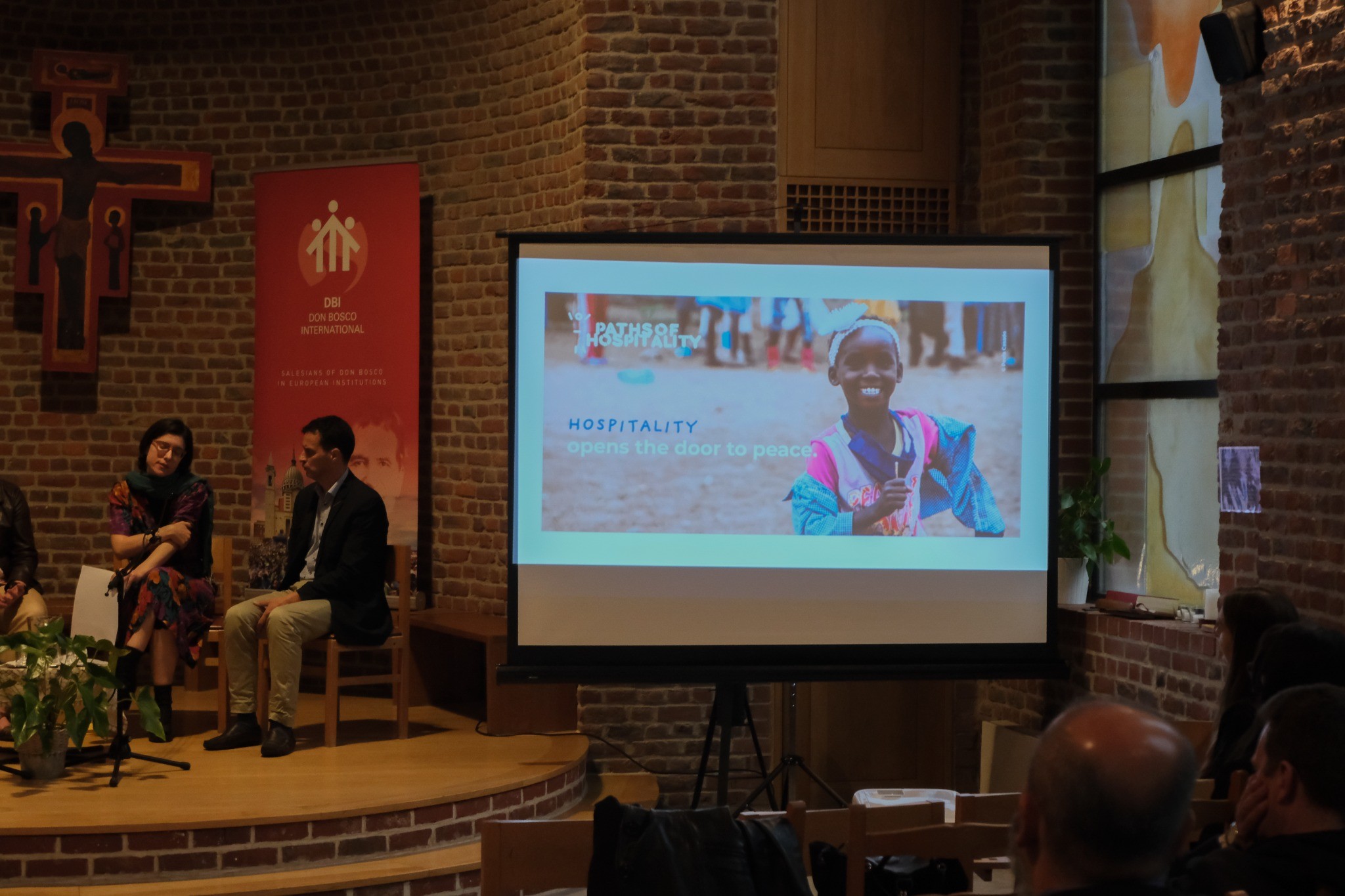
Mariza spoke about the importance of hospitality in the mission of JRS Europe, through its 23 regional offices in over 240 locations, serving around 200,000 people each year. Mariza presented three examples of how hospitality is put into practice at JRS: Firstly, Paths of Hospitality, an initiative that aims to foster a culture of solidarity and inclusion with people who are forced to migrate. This initiative takes place in various parts of Europe and around the world.
Secondly, she introduced us to the Fáilte Project, run by JRS Ireland at the Balseskin Reception Centre in Dublin, working with newly arrived asylum seekers. The project organises various activities to foster integration and promote wellbeing.
Finally, the Women’s Day Centre run by JRS Greece, a safe space for women and their children, which provides social support and interpretation, activities, workshops, and an opportunity to build relationships and develop skills.
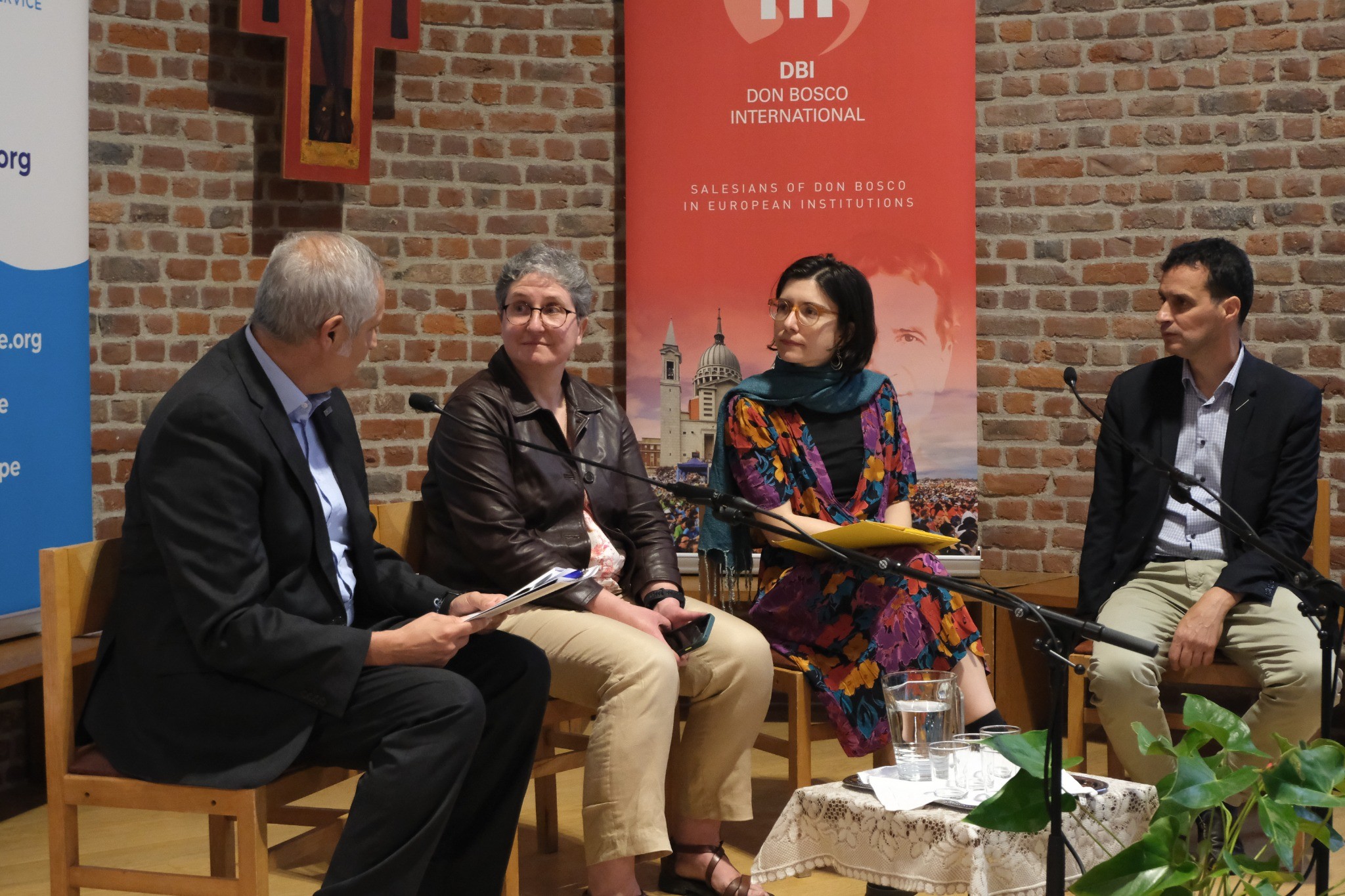
The event was a great success, not only because of the quality of the content and the active participation of colleagues, but also thanks to the strong turnout, the warm atmosphere among attendees, and the thoughtful questions posed to the panellists. The evening also ended on a delicious note, with excellent food prepared by an Indonesian refugee entrepreneur, adding a further example of hospitality in action.
At a time when public debate around migration can feel increasingly polarised, gatherings like this remind us that good practices of welcome, accompaniment, and dignity are not abstract ideals but real and effective ways of contributing to fairer and more humane societies. By sharing stories of resilience and models of solidarity, the event highlighted the many ways in which hope can meet hospitality in practice.
Just yesterday, during his visit to one of Europe’s frontiers, the Canary Islands, Pope Leo reminded us of the importance and urgency of hospitality. Alberto Ares quoted him at the end of the event:
‘What kind of world have we built, if so many of our brothers and sisters have to risk death in search of life? We cannot grow accustomed to counting the dead. Human dignity has no passport, nor does it lose its value when crossing a border… Because today, here, by the sea, every life that arrives asks us what remains of our humanity. Sooner or later, it will become clear whether we were able to safeguard it or whether we let indifference speak for us.’ (Pope Leo)