The Screening Regulation in Practice: Sharing Experiences and Strengthening Cooperation for Human-Rights-Based Implementation
20 November 2026
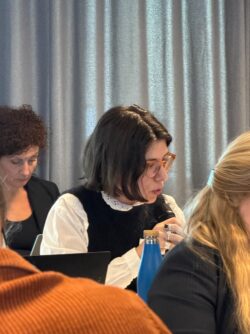
On 30 October 2026, JRS Europe took part in the Expert Meeting “The Screening Regulation in Practice: Sharing Experiences and Strengthening Cooperation for Human-Rights-Based Implementation”, which was held in Brussels. The event was jointly organised by the EU Representation Office of the UN High Commissioner on Human Rights (OHCHR) and the European Network of National Human Rights Institutions (ENNHRI).
The meeting brought together representatives from EU institutions, national authorities, international organisations and civil society to exchange different experiences and discuss the implementation of the EU Screening Regulation (Regulation (EU) 2024/1356), part of the EU Pact on Migration and Asylum, which entered into application on 12 June 2026.
The main themes discussed were the new screening elements introduced by the Screening Regulation and their practical implications; the concept of preliminary vulnerability checks and the application in practice thereof; and the importance of having in place independent and effective monitoring mechanisms (IMMs), as laid down in the Pact legislative instruments.
JRS Europe’s Advocacy and Policy Coordinator, Mariza Koronioti, contributed to the discussion as a speaker, focusing on the challenges faced during preliminary vulnerability checks and cooperation between screening authorities and NGOs. Her intervention drew on evidence gathered from JRS Europe’s on-the-ground presence across Europe and the monitoring work that the JRS Europe Advocacy Taskforce has undertook since the beginning of the application period of the Pact.
One of the main challenges identified is the late or inadequate identification of vulnerabilities during screening. Through examples based on JRS Europe work, it was illustrated how the way preliminary checks are conducted might fail to identify complex needs or vulnerabilities that might be invisible yet acute. The vulnerability check should take place at the beginning of the screening procedure and be followed by immediate concrete action. However, identifying a vulnerability does not immediately lead to safeguards, procedural adjustments or access to necessary support that corresponds to the needs of the person, as provided by the Screening Regulation. In cases, it can even lead to people being led to or remaining in detention or even having their vulnerability gone unconsidered, albeit stated. The quality of the check can be affected by lack of adequate expertise and appropriate conditions, such as insufficiently trained and specialised staff, limited language interpretation, cultural mediation, time constraints during interviews – which is inherent to the screening procedure – and lack of privacy in screening facilities. The digitalisation of the processes can also lead to the exclusion of digitally illiterate individuals, for whom an alternative administrative solution should be offered to guarantee effective access to services and adequate examination of their case.
In addition, during her intervention, our Advocacy and Policy Coordinator underlined how cooperation between screening authorities conducting the preliminary vulnerability checks and Non-Governmental Organisations varies significantly across countries. NGOs are not always involved in the process or have limited access to screening facilities. The key question is whether NGOs are given enough space by the states to contribute meaningfully and accompany affected individuals. According to JRS Europe’s collective experience, access to facilities is becoming increasingly difficult, and in some cases even impossible, which leads to opaque procedures and erosion of the rule of law.
JRS Europe is glad to have engaged in the discussion and be able to share the experience of the network in such important fora. Based on this initial application period of the Pact and consequently of the Screening Regulation, we strongly recommend that
- the preliminary vulnerability check is carried out right from the beginning of the screening procedure and is followed by immediate concrete action and appropriate referrals to medical and psychosocial experts.
- the staff conducting the checks is duly trained, specialized and that procedures remain gender- and culturally sensitive.
- interpretation, cultural mediation, privacy, time sufficiency, and proper information provision remain in place.
Furthermore, to ensure effective cooperation between screening authorities and NGOs, JRS Europe recommends that:
- Effective access is offered to NGOs and civil society to screening facilities, allowing them to offer their expertise on medical assistance, legal aid, social work and assist, when needed, the authorities and the individuals with referral mechanisms.
- There is a clear division of roles and responsibilities, which guarantee accountability and effective coordination among different actors and does not result in delays and increase of backlog.
- Structured communication channels for NGOs exist to share recommendations and concerns.
- Effective follow-up procedures after vulnerability checks are in place to establish in an organised way what the next steps are to make sure that a do-no-harm approach is adopted.
The meeting was a great opportunity to share experiences, discuss the challenges of implementing the Screening Regulation and to strengthen cooperation. JRS Europe will keep on advocating for the rights of refugees and forcibly displaced people by monitoring the application of the new CEAS rules by any means possible.