
SMART UA explores pathways to the labour market for Ukrainian refugees
22 October 2026
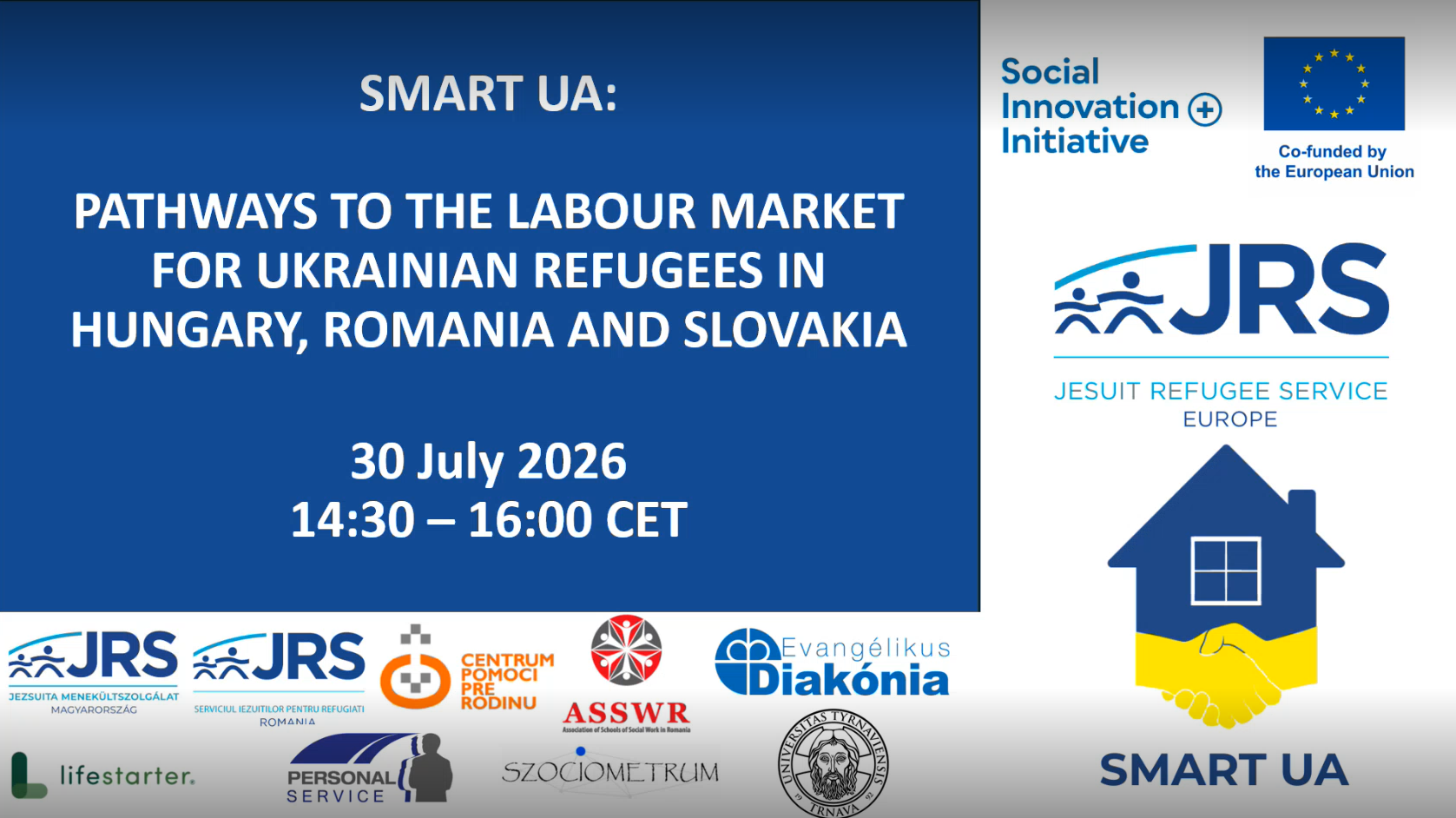
Access to employment remains one of the key factors shaping the long-term inclusion of Ukrainian refugees across Europe. Within the SMART UA project, partners from Hungary, Romania and Slovakia came together for a transnational exchange to compare research findings, practical experiences and lessons learned on how to strengthen pathways into the labour market.
The discussion brought together project partners, practitioners and stakeholders from the three countries, combining research presentations with examples of activities implemented directly with Ukrainian refugees, participant testimonies and reflections on the challenges that still limit access to sustainable employment. The exchange took place on 30 July 2026 and gathered 71 participants.
Common barriers across different national contexts
Research presented during the exchange showed that several challenges recur across Hungary, Romania and Slovakia.
Language barriers remain one of the most significant obstacles to accessing qualified employment. Difficulties with the recognition of professional qualifications and diplomas also contribute to a persistent mismatch between refugees’ skills and the jobs available to them. Across the three countries, the findings pointed to skills mismatch rather than a lack of willingness to work as a central barrier to labour market integration.
The national contexts also revealed specific challenges. In Hungary, limited job-search support, transport and childcare were highlighted alongside language and qualification recognition. In Romania, informal employment remains an important concern, leaving some refugees without adequate labour protections. In Slovakia, more than 90% of surveyed refugees identified language proficiency as a major barrier to qualified employment, while childcare, housing and complex diploma-recognition procedures also contribute to underemployment.
Turning research into practical support
SMART UA partners are responding to these barriers through a range of activities tailored to national needs.
In Hungary, JRS Hungary has provided Hungarian language courses, while Evangelical Diaconia has implemented entrepreneurship, soft-skills, web-development and digital-literacy training. In Romania, JRS Romania has combined language learning, IT and soft-skills training, self-employment sessions and employment counselling, reaching more than 1,000 participants through the activities presented during the exchange.
In Slovakia, Lifestarter has provided digital and IT skills, career development, entrepreneurship and mentoring activities, while CPPR has delivered Slovak language, soft-skills and self-employment courses and developed practical guidance on the recognition of Ukrainian qualifications.
Employment as part of a wider pathway to inclusion
A central takeaway from the exchange was that labour market integration cannot be addressed through isolated interventions. Language learning, career guidance, qualification recognition, vocational training, legal support and mentoring are more effective when combined with personalised accompaniment.
Partners also stressed the importance of cooperation between civil society organisations, employers, educational institutions and public authorities, alongside the need to remove practical barriers such as childcare, transport and administrative complexity.
The discussion was complemented by testimonies from Ukrainian refugees living in Romania and Slovakia, helping connect the research and project activities with the lived experience of people navigating a new labour market.
Across the three countries, one message emerged clearly: sustainable employment is not only about finding a job, but about creating the conditions for people to use their skills, build independence and participate fully in the communities where they live.
Co-funded by the European Union. Views and opinions expressed are, however, those of the author(s) only and do not necessarily reflect those of the European Union or the European Social Fund Agency. Neither the European Union nor the Granting Authority can be held responsible for them.