
Housing Workshop - Strengthening Access to Housing for Ukrainian Refugees in Romania
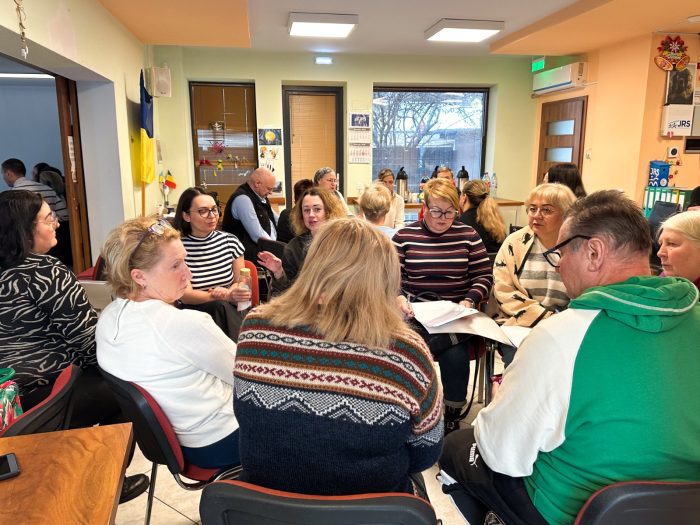
On 23 January 2026, a workshop and the launch of the Romanian Housing Mapping Report and the Housing Market Analysis Report took place within the framework of the SMART UA project, organized in cooperation with JRS Romania.
The event brought together social work professionals, researchers, civil society organizations, public institutions and practitioners involved in supporting access to housing for Ukrainian refugees in Romania. The workshop provided a dedicated space for dialogue, evidence-based reflection and exchange of practices on housing as a key pillar of social inclusion.
During the workshop, the two national research reports were officially presented:
- the Housing Mapping Report, which analyses the institutional and non-institutional actors involved in supporting access to housing for Ukrainian refugees;
- the Housing Market Analysis Report, which examines housing market dynamics, availability and affordability, barriers to access, and examples of good practices identified in Romania.
The reports were presented by Lecturer PhD Smaranda Witec (University of Bucharest, Faculty of Sociology and Social Work), who participated in the workshop as a Research Expert affiliated with the Association of Schools of Social Work in Romania (ASSWR). The presentations highlighted the main findings of the research, including the strong reliance on the private rental market, financial pressure affecting housing stability, administrative and linguistic barriers, as well as the role of public institutions and non-governmental organizations in facilitating access to housing.
Among the main challenges discussed during the workshop were:
- limited availability of affordable housing on the private market;
- high rental costs and financial instability affecting housing retention;
- informal rental arrangements and difficulties related to contracts and documentation;
- discrimination and reluctance from some landlords;
- the need for stronger coordination between public authorities, NGOs and other stakeholders.
Participants also highlighted promising practices, such as mediation between landlords and refugees, integrated social and housing support, targeted financial assistance and individualized case management for vulnerable households.
The interactive group sessions enabled participants to share practical field experiences and to jointly reflect on policy-relevant recommendations aimed at improving housing stability and access for Ukrainian refugees. The discussions emphasized the importance of predictable, coordinated and long-term housing support mechanisms, supported by multi-stakeholder cooperation.
The workshop benefited from the participation of David David D’Agnelli, Project Manager at JRS Europe, whose contribution reinforced the transnational dimension of the SMART UA initiative.
This event contributes to the broader objectives of SMART UA – Scaling the successful social inclusion and integration of Ukrainian refugees in Hungary, Romania and Slovakia through an innovative multi-stakeholder cooperation, by supporting knowledge generation, institutional capacity building and collaboration at national and local level.
Co-funded by the European Union. Views and opinions expressed are, however, those of the author(s) only and do not necessarily reflect those of the European Union or the European Social Fund Agency. Neither the European Union nor the Granting Authority can be held responsible for them.