Political Vocation and the Common Good: Deusto Students Reflect on Migration at JRS Europe
10 July 2026
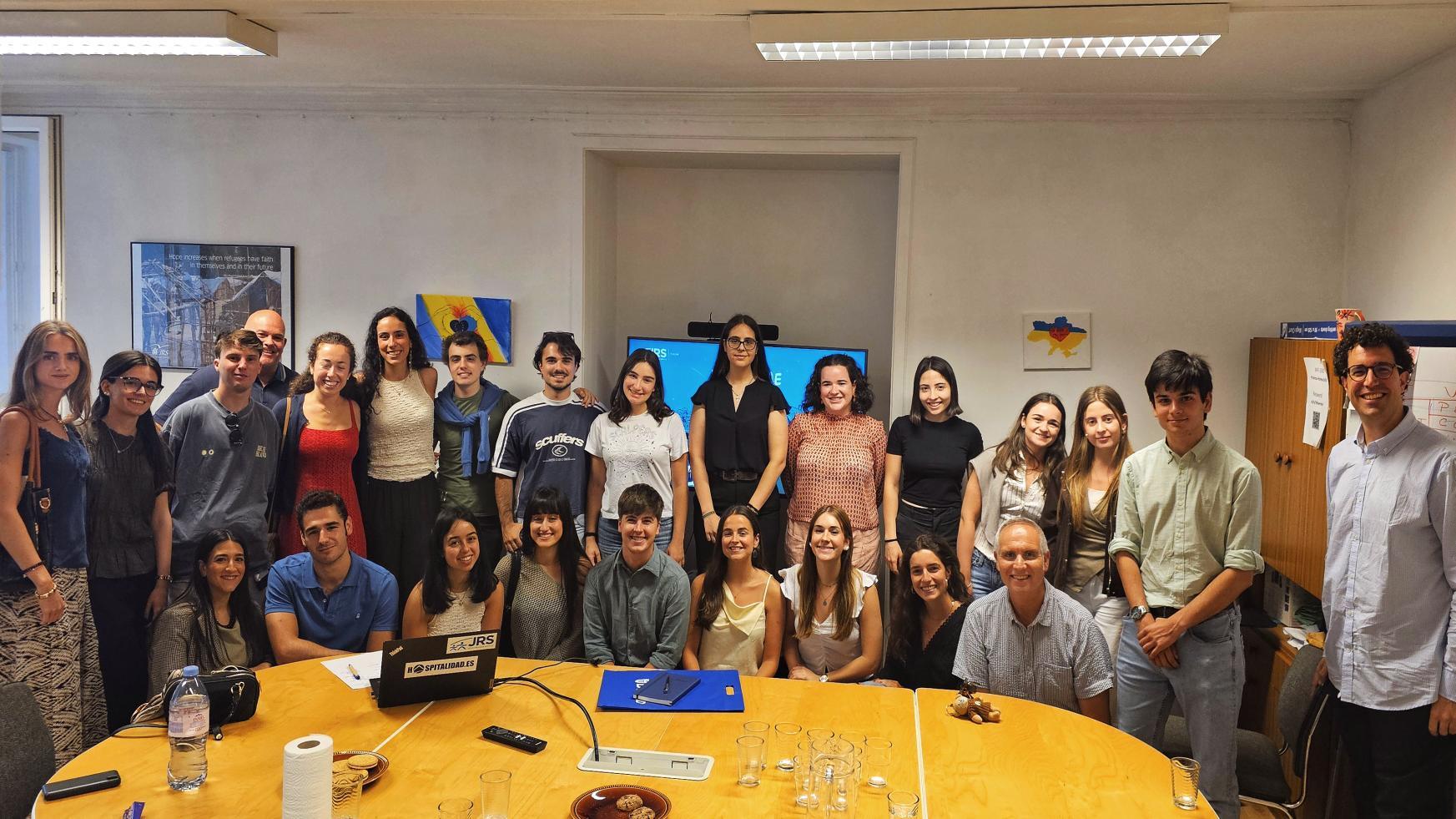
A group of students from the University of Deusto, accompanied by two professors—including Jesuit Pello Azpitarte—visited the JRS Europe office in Brussels on June 30 as part of a week-long formation experience entitled “Spiritual Itinerary in Brussels: Political vocation, common good, and building the city” (June 29 – July 4).
The visit formed part of an academic and spiritual programme designed to explore the intersection between faith, public responsibility, and social engagement within the European context. The encounter at JRS Europe offered participants a concrete opportunity to engage with one of the key humanitarian and social challenges shaping the continent today: migration and forced displacement.
The session began with a round of introductions, creating a space for mutual exchange and dialogue. Alberto Ares, Regional Director of JRS Europe, then presented an overview of the current realities of migration across Europe, highlighting both the complexity of the phenomenon and the human stories at its core.
Particular attention was given to the mission and work of JRS Europe, which coordinates the efforts of 23 country offices across the region. Through this network, JRS accompanies, serves, and advocates for more than 200,000 forcibly displaced persons each year. The presentation outlined key priorities, including access to protection, reception and integration processes, mental health and psychosocial support, and advocacy at the European level.
The discussion also addressed some of the most pressing current challenges, including the ongoing consequences of the war in Ukraine and the situation of millions of displaced people both within and beyond European borders. Participants were invited to reflect not only on policy responses, but also on the ethical and spiritual dimensions of hospitality, solidarity, and the common good.
The visit concluded with a rich exchange of questions and reflections, connecting the students’ academic formation with lived realities and institutional responses. Encounters such as this form an essential part of building a new generation of leaders committed to justice, dignity, and a more inclusive European society.