JRS Europe Highlights the Human Cost of EU Migration Policy at UCSIA Winter School
24 August 2026
From 2 to 6 February 2026, the UCSIA Winter School on ‘European Solidarity in the Making’ convened in Antwerp, Belgium. This high-level academic forum, a collaboration with the Antwerp Summer & Winter University, brought together master’s and doctoral students from across Europe to grapple with a pressing question: What does European solidarity mean in an era of international migration?
The 2026 edition focused critically on the disconnect between policy frameworks and lived realities. It aimed to equip participants with a deeper understanding of the EU’s evolving migration agenda and to explore the vital roles of advocacy, legal scrutiny, and grassroots action in bridging the gap towards a more humane and cohesive Europe.
Agency and Change: A Critical Roundtable on European Migration Policy
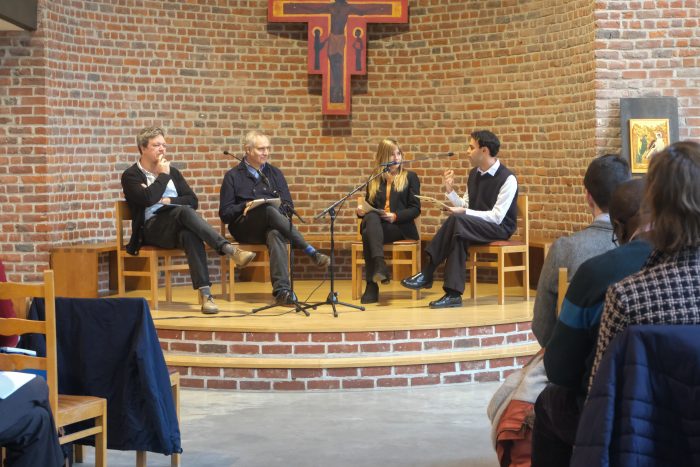
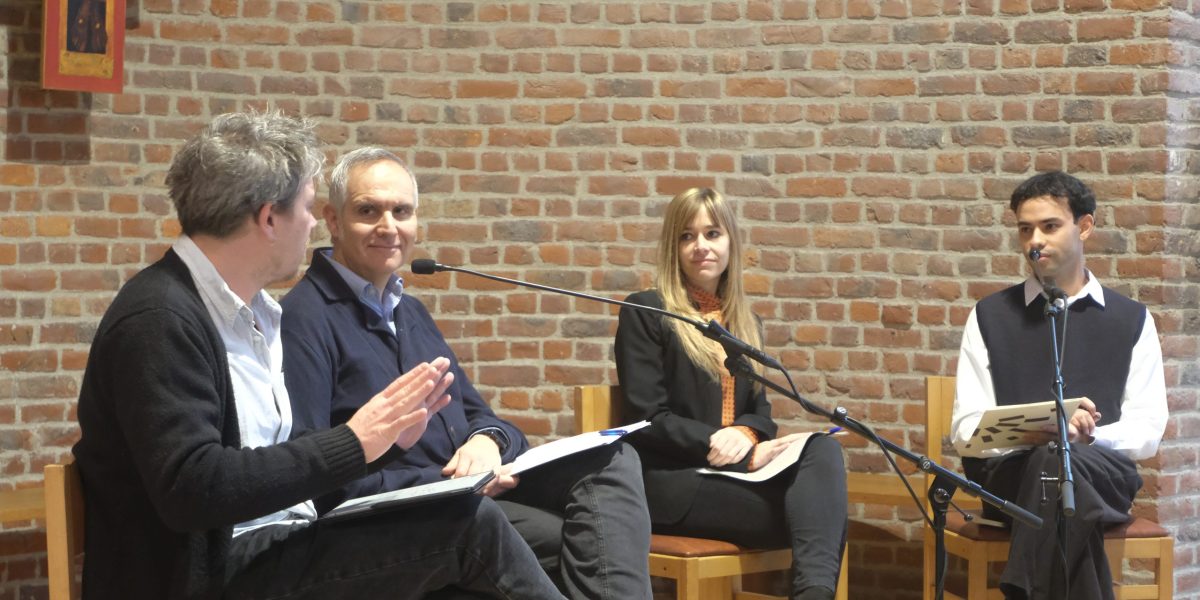
A key session of the Winter School was the panel debate on European Migration Policy, held in the Chapel for Europe, Brussels, on 5 February. This roundtable, themed around agency and transformative change, featured our Director, Alberto Ares SJ, alongside Eleonora Testi from the European Council on Refugees and Exiles (ECRE) and Ruben Wissing from the Migration Law Research Group (MigraLaw) at Ghent University.
The discussion was structured around three interlinked dimensions:
- The future direction of EU migration policy and its implications for research and advocacy.
- The political and legal consequences of top-down solidarity mechanisms between member states.
- The role of civil society, NGOs, and faith-based actors in fostering bottom-up solidarity with migrants and refugees.
Alberto Ares SJ: Diagnosing the Disconnect, Advocating for Dignity
In his intervention, Alberto Ares provided a stark, evidence-based analysis from the perspective of JRS Europe’s daily work across 23 countries. He argued that current EU policy, particularly the New Pact on Migration and Asylum, is translating into a system of “managed exclusion” and a “politics of deterrence.”
His main critiques focused on the systematic prioritisation of containment and return over protection and integration. He detailed how mechanisms like the expanded border procedures often create detention-like conditions, limit legal access, and force hasty decisions that undermine fair assessment and increase the risk of refoulement. This “funnel of precarity,” he explained, leaves countless individuals in legal limbo and fear, eroding their human dignity.
Against this backdrop, Alberto championed an alternative vision rooted in human dignity and a “virtuous cycle” of practice, research, and advocacy. He called for policies measured not by their efficiency in reducing numbers but by their success in upholding human rights. He outlined JRS Europe’s blueprint for “hospitality-driven reception,” based on principles such as privacy, small-scale community housing, integration from day one, and empowerment.
His clear call to action was for a rebuild of political courage for solidarity. He urged EU institutions and member states to move beyond transactional “solidarity” that allows states to buy their way out of responsibilities. Instead, he advocated for mandatory, predictable responsibility-sharing that genuinely alleviates pressure on frontline states and prioritises the relocation of vulnerable people.
Throughout, Alberto connected the policy debate directly to the human dimension and the core of JRS’s mission. He emphasised that the greatest disconnect occurs when institutions see a “case file” rather than a “brother or sister.” Our advocacy, he stressed, is credible because it is grounded in the daily practice of accompaniment, service, and witnessing to individual stories. This faith-based, people-centered perspective is non-negotiable and forms the foundation for demanding systemic change.
A Vital Platform for a Critical Voice
JRS Europe’s participation in this prestigious forum underscores our role as a critical voice in European migration dialogues. We continue to bridge the worlds of frontline experience, academic research, and policy advocacy.
The insights and exchanges from the UCSIA Winter School will directly inform our ongoing work and advocacy. They reinforce our commitment to challenging narratives of fear, documenting rights violations, and tirelessly working towards a Europe where solidarity is measured by welcome, justice, and the unwavering respect for human dignity.