
Navigating Securitisation and Polarisation: Hospitality as Evangelical Resistance
28 July 2026
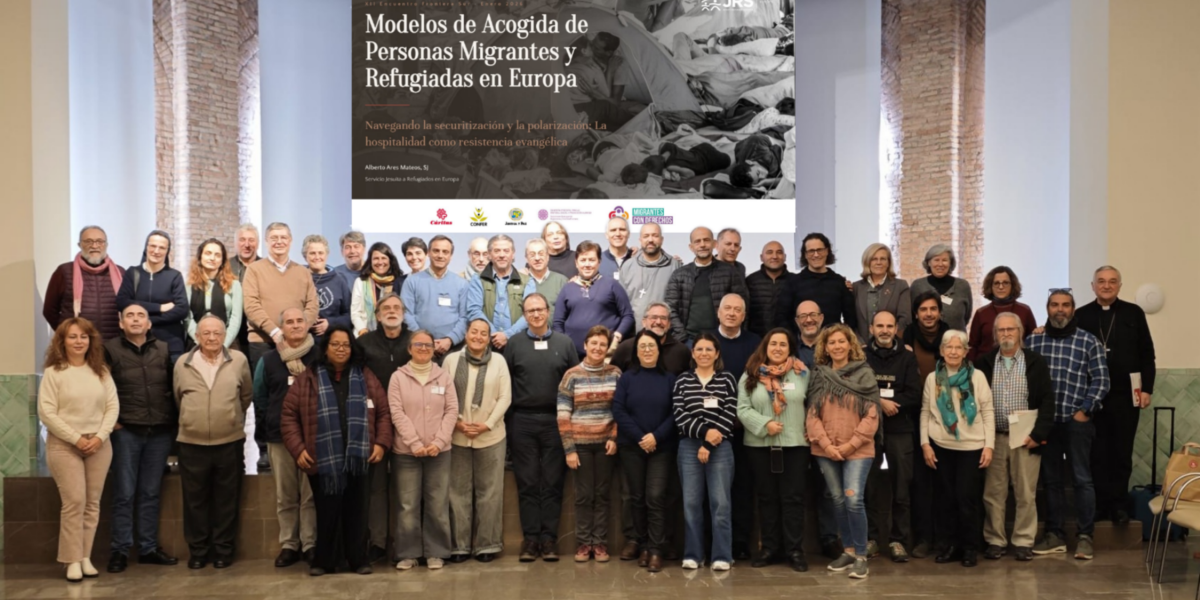
Under the title ‘Migrants, missionaries of hope’, the Diocesan House of Spirituality in Malaga hosted a transformative encounter on 19 and 20 January to analyse the current migration situation and strengthen hospitality networks in southern Spain and northern Africa.
The city of Malaga was the setting for the 12th Southern Border Working Conference, a space for reflection and coordination that brought together experts, pastoral agents and church representatives. The meeting, marked by a spirit of synodality, was structured in three main blocks that allowed attendees to ‘get their feet on the ground,’ share experiences and plan for the future of accompanying migrants.
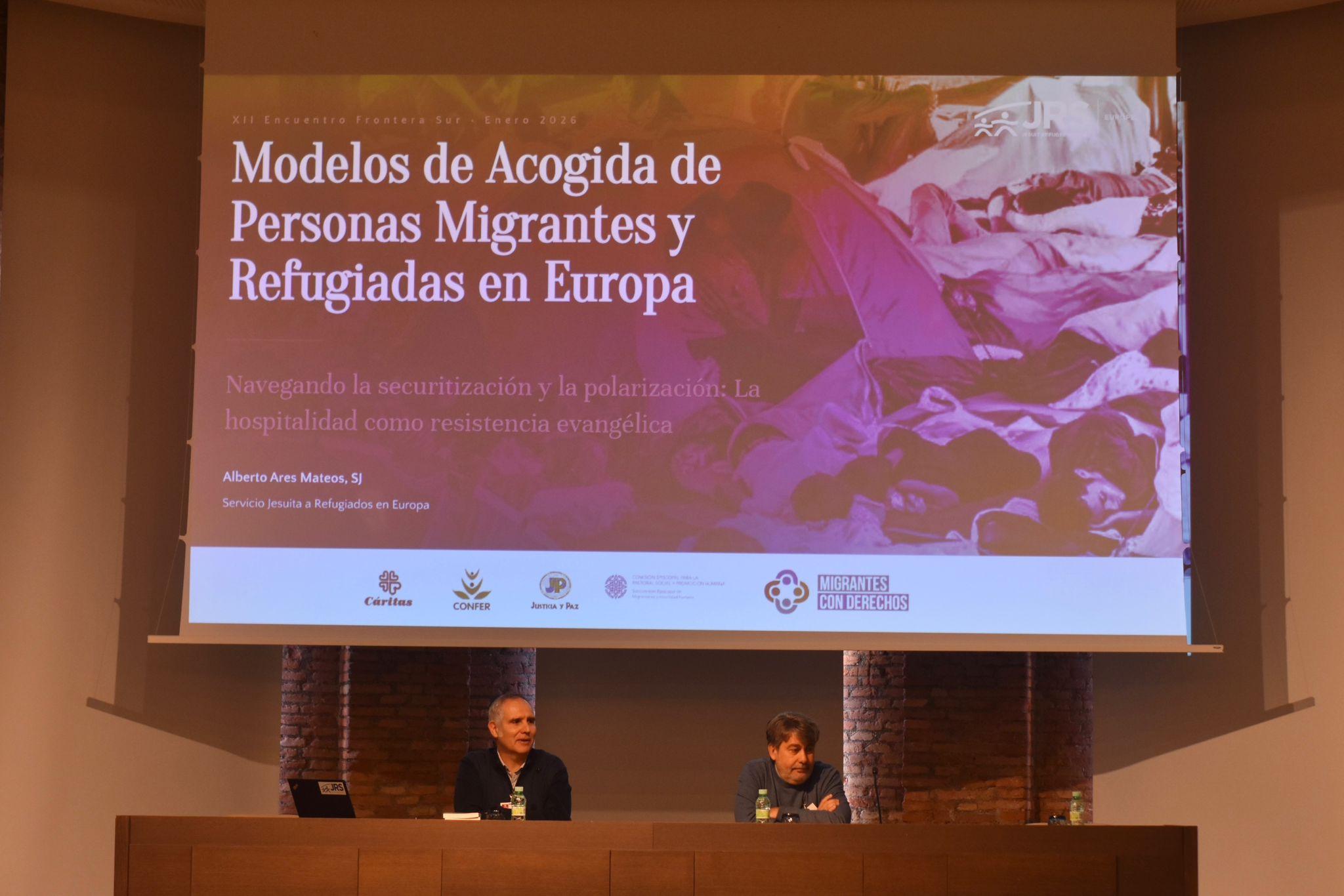
Alberto Ares, director of Jesuit Refugee Service (JRS) Europe, gave a presentation on “Models of reception for migrants and refugees in Europe: Navigating securitisation and polarisation. Hospitality as evangelical resistance.” In his presentation, he introduced the work that JRS carries out in its 23 country offices, as well as the value of hospitality that is at the heart of JRS’s mission in Europe. Alberto took the opportunity to present his new book, Ser Puerta Abierta (Being an Open Door).
This meeting, organised by the Migrants with Rights Network, made up of the Spanish Conference of Religious – CONFER (which integrates the work of the Jesuits and SJM Spain), the Subcommittee for Migration and Human Mobility of the Spanish Episcopal Conference (CEE), Caritas Spain and Justice and Peace, will benefit from the charisma of diocesan delegations, religious congregations working in border contexts, and Catholic organisations with shared missions that carry out local and international cooperation projects on the southern and northern borders on both sides of the Mediterranean.
Within the framework of this 12th edition, emphasis is placed on the importance of listening to and accompanying migrant and refugee communities on the southern border of Spain and northern Morocco; learning first-hand about the current reality of migrants in this context; sharing models of welcome and hospitality that are good news; and proposing reflections and proposals in a synodal key.
The overall objective of these Southern Border meetings is to continue strengthening the work that the Church is doing on both sides of the border. The more specific objectives are: To maintain reflection and awareness of the reality on both sides of the southern border; to share lines of work and experiences that Church organisations have in relation to this reality; to consolidate coordination and cooperation between Church entities on both sides of the border; and to define challenges and paths for future work.
The opening day began on Monday 19th with a moment of prayer and a warm welcome from Monsignor José Antonio Satué, Bishop of Malaga, who emphasised the importance of seeing migrants not only as people who are suffering, but as ‘missionaries of hope’.
Block I, entitled ‘The reality of the border today’, focused on the technical and human analysis of the meeting. First, with an X-ray of the Southern Border by Fanny Curet, coordinator of the RAEMH, who gave a presentation on the current challenges in the border areas, highlighting the complexity of migratory flows and the vulnerability of those who travel these routes. Next, two testimonies from the field were shared: Projects such as Cáritas Prefecture Apostolique in Laayoune and Dakhla (Western Sahara) were presented by Mario Leon, and the “Corredores de Hospitalidad” (Hospitality Corridors) initiative in the Canary Islands was presented by Caya Suárez, Secretary General of Cáritas Diocesana de Canarias. These are two examples of resistance and charity on the front line. The afternoon concluded with group work where the challenges raised in the presentations were explored in greater depth.
The second day of work was divided into two complementary blocks that sought to translate theory into models of success and spirituality. Block II: Sharing experiences focused on practical responses to a complex social context. Alberto Ares opened the block by analysing models for welcoming migrants and refugees in Europe in the face of growing trends of ‘securitisation and polarisation’. Two good practices were then presented: Firstly, the ‘Bienvenidos’ (Welcome) project: an initiative of the Parish Caritas of the Archpriesthood of Genil (Granada) presented by Luisa Mª Maeso, director of Caritas Granada. A new training project in Almería was also introduced by the SJM, presented by Monsignor Antonio Gómez, Bishop of Almería, highlighting education as a tool for integration.
Block III, under a synodal theme, sought to explore the spiritual sustenance of daily work. Josema Aparicio, from Comillas Pontifical University, offered the evangelical keys necessary to sustain the networks of welcome.
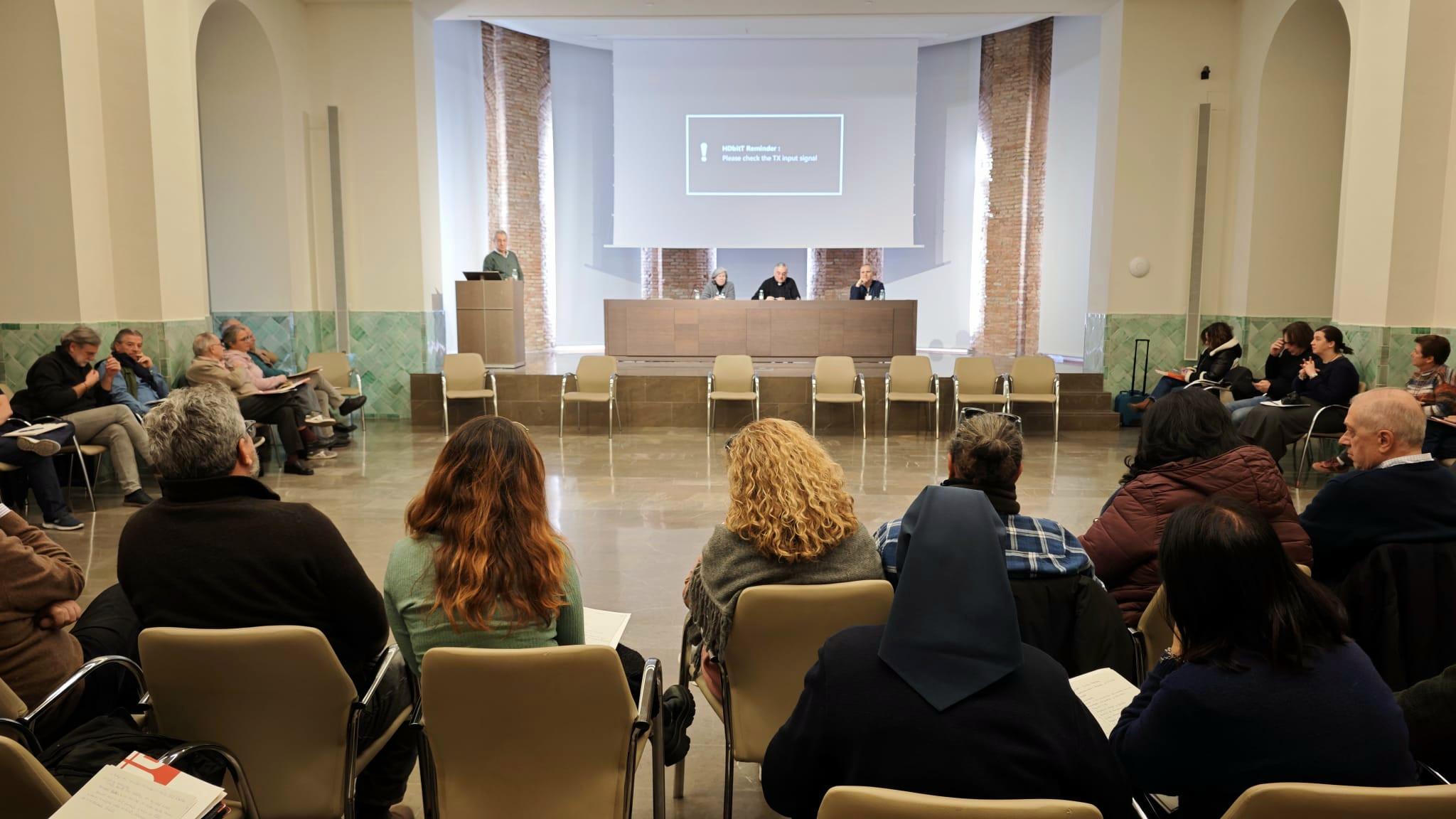
After a discussion and final evaluation, the conference concluded with a renewed commitment to continue building a Church that is a common home. Participants agreed that the Southern Border is not only a geographical line, but a theological place where hope becomes flesh through welcome.