Standing for Rights: Insights from the JRS Europe Advocacy Taskforce
26 August 2026
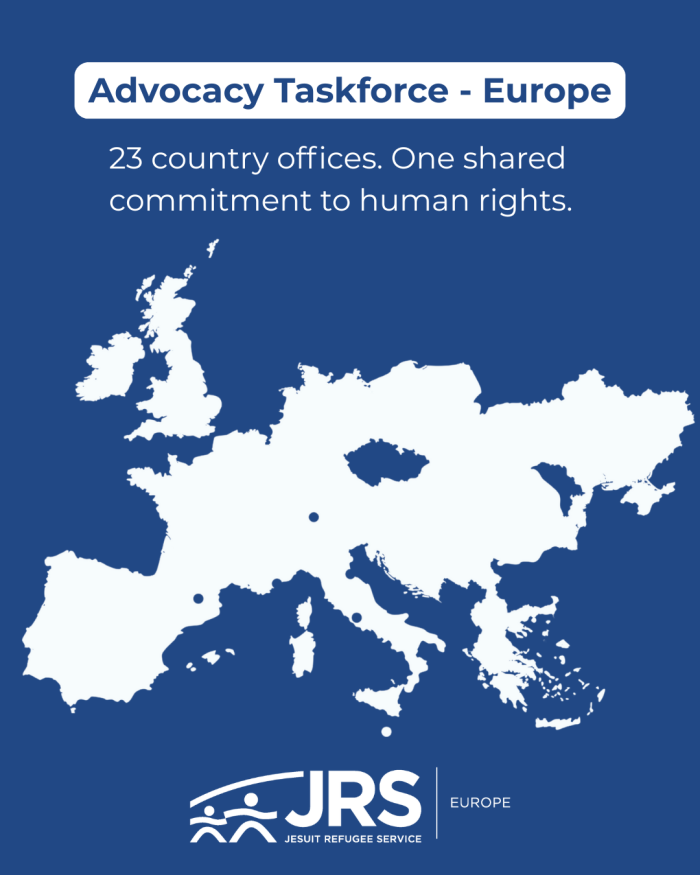
Before the end of this year, on 17.12.2025, our Advocacy Taskforce of 23 country offices in Europe met to discuss national developments of last months and get up to date on latest EU policy and legislative developments. Our meeting serves as a reminder that our network is present all over Europe and committed to continue advocating for the human rights of people we serve.
The exchanges among colleagues highlighted a rapidly deteriorating political climate for migrants and asylum seekers across Europe, a very concerning tendency that can be noticed in the region of Balkans as well as at the north of Europe. Participants reported a clear shift toward more restrictive, security-driven migration policies, often justified by the need to restore “order,” gain “control,” and protect “the social cohesion of the country”. From Belgium and Portugal to the UK and Ireland, new laws and proposals are being designed to restrict access to protection, adequate reception, family reunification, and long-term stability, while political discourse increasingly portrays asylum seekers as a burden or threat. Misinformation and hostile media narratives is compounding the challenges faced by people on the move and fuelling intolerance, considering the unwillingness of Member States to collect and share official data, on the one hand, and make laws based on evidence and research findings, on the other hand.
Several country updates pointed to concrete and troubling policy developments, being monitored by our advocacy colleagues on the ground. These include expanded detention frameworks and new detention centers being set up, like in Spain, faster but less accessible procedures, reduced safeguards for children and other vulnerable groups, like in UK and Ireland, and growing use of returns, especially as the EU is working towards a new Returns Regulation, which will mostly do harm to the rights of people. Housing crises and cuts to reception capacity are pushing more refugees into homelessness, like in Belgium and Ireland, while labour migration systems in some countries, like in Croatia, are marked by exploitation, lack of oversight, and weak protection of migrant workers’ rights. Agreements between countries are either concluded and implemented, as is the case of the “one in one out” between UK and France or the one between Italy and Albania, or being discussed as the scenarios of agreements or arrangements between UK and Kosovo and North Macedonia. At EU level, discussions on returns, detention, and the implementation of the Pact on Migration and Asylum suggest further erosion of the right to an effective remedy and safeguards for fundamental rights.
At the same time, colleagues of the JRS country offices across Europe continue to engage in sustained advocacy to defend dignity and rights and admirable work is being done. This includes publishing detention reports, monitoring returns, submitting legislative recommendations to amend proposed laws, engaging with national and EU institutions, and working in coalition with other NGOs, churches, and academic actors. Attention is being paid to issues such as access to legal aid, immigration detention, age assessment of minors, statelessness, labour rights, and the treatment of families and people with mental health conditions in detention. In several contexts, colleagues are also considering or pursuing strategic litigation to address systemic violations and contribute to the creation of legal precedent.
Overall, our meeting underscored both the severity of the current challenges and the importance of coordinated, accompaniment-based advocacy, which is at the heart of our mission. As political space narrows and policies grow harsher against people on the move, JRS Europe remains committed to standing with migrants, asylum seekers, and refugees, amplifying their voices, and working at national and European levels to safeguard fundamental rights and humane standards of protection. We will keep going.
Mariza Koronioti, Advocacy and Policy Coordinator